

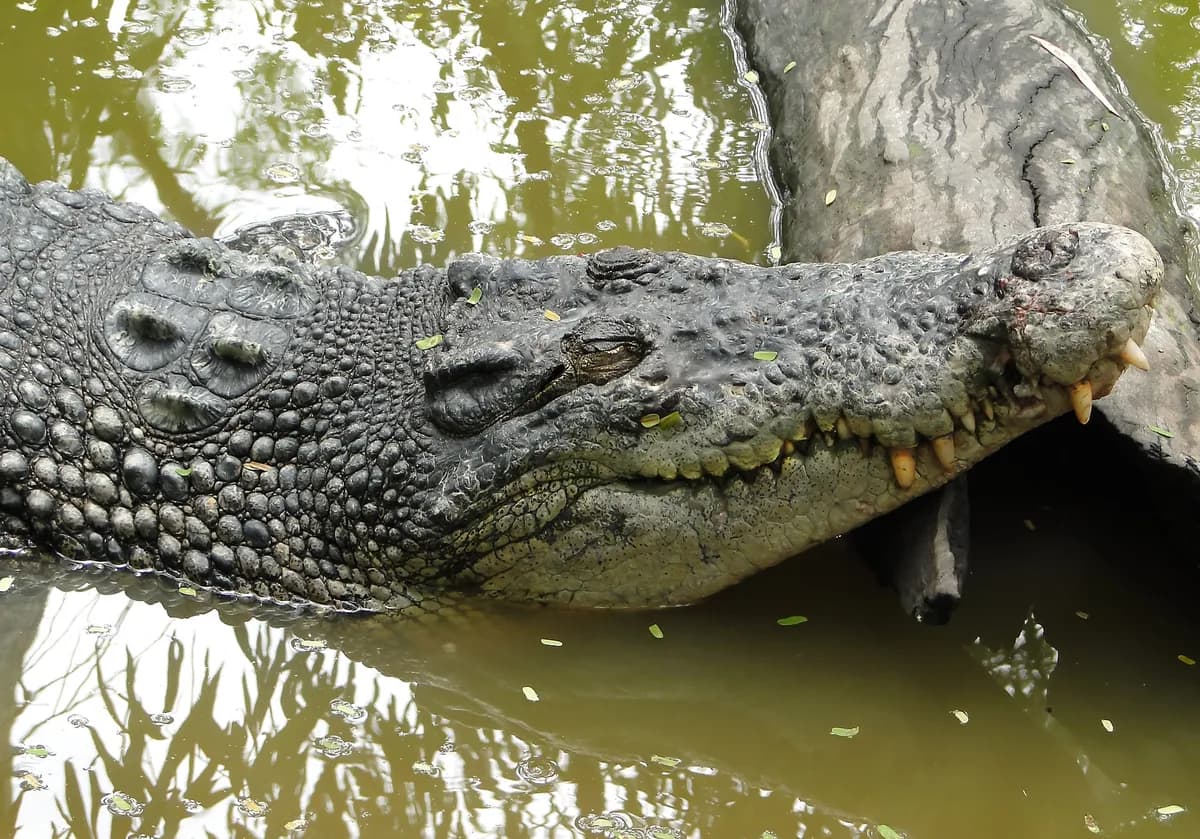
A massive crocodile attacked a man in his 20s at a tourist hotspot on Saturday, April 18, according to multiple reports. The incident occurred on a beach in the Kimberley, near Hidden Creek in Western Australia on the Dampier Peninsula. This location is nearly 1300 miles north of Perth. The campground where the attack happened is popular with tourists and is situated about 31 miles north of Broome.
After the attack, the man was initially taken to Broome Hospital in a stable condition, as confirmed by the WA Country Health Service. On Sunday, he was flown from Broome to Royal Perth Hospital via the Royal Flying Doctor Service, according to the same source. His current medical condition and prognosis have not been disclosed, and it is unknown if he required surgery or specialized treatment.
The Department of Biodiversity, Conservation and Attractions was notified of the incident on Monday, a spokesperson said. According to the department, it is investigating the incident and had already been in touch with the man's family. Specific actions being taken in the investigation, such as whether the crocodile involved has been located or identified, remain unclear. It is also unknown if there were any witnesses to the attack and what details they might have provided, or if the department plans to implement safety measures at the site.
This marks the second crocodile attack reported in the Kimberley in less than five months. In January, a man survived an attack but suffered severe lacerations across his body after an encounter with a three-metre saltwater crocodile near the remote La Djardarr Bay Community. Safety measures or warnings at the campground following the latest attack have not been detailed, and it is unclear if authorities have issued any public advisories.
Saltwater crocodiles are common along the Kimberley coast and are known to inhabit beaches, creeks and tidal waterways. They are far more aggressive than freshwater crocodiles and can grow up to six metres in length. These reptiles are apex predators in the region, and their presence in tourist areas raises concerns about wildlife management and public safety.