

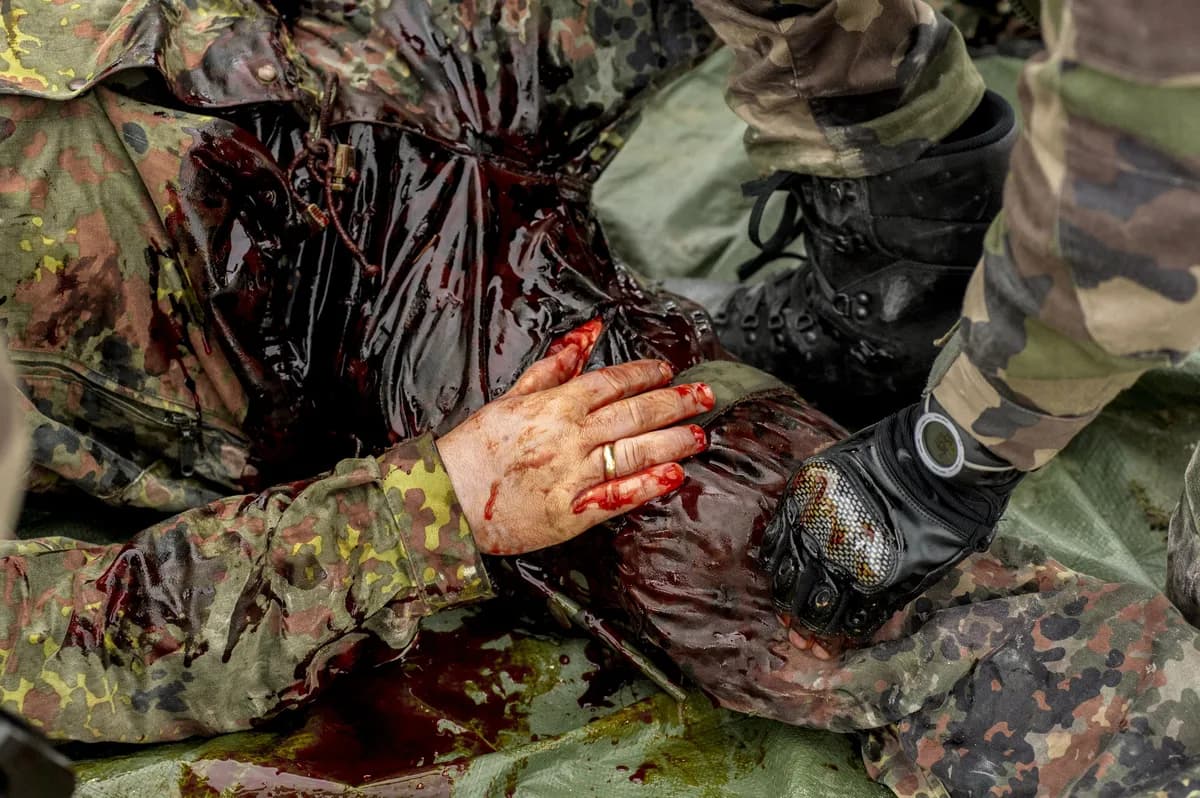
On March 31, Ukraine marks four years since the liberation of Bucha, a town whose name became synonymous with the brutality of Russian occupation. For much of the world, Bucha remains one of the defining images of the early phase of the full-scale invasion, and for Ukrainians, it is a reminder of what Russian control means in practice. The current diplomatic process has brought together Ukrainian, American, and Russian representatives in different formats without producing a common framework or a credible route to ending the war. These meetings have increasingly looked less like negotiations than parallel conversations with no destination.
Ukrainian authorities documented over 1,400 civilian deaths in the Bucha district, including 37 children, with over 175 in mass graves and alleged torture chambers. Over 450 bodies were discovered in Bucha after Russian withdrawal, many showing signs of execution, torture, and mutilation. Satellite imagery and intercepted communications confirmed bodies were in streets while Russian forces were present in Bucha, establishing the town as an epicenter of war atrocities.
Russia has denied committing massacres in Bucha, claiming deaths were staged by Ukraine. In intercepted phone conversations regarding actions in Bucha, Russian soldiers used the term 'zachistka' (cleansing). A Russian platoon commander, Yurii Vladimirovich Kim, is suspected of ordering war crimes in Bucha, including 17 killings and 4 instances of ill-treatment. The International Criminal Court and Ukrainian prosecutors have launched war crimes investigations related to Bucha and other incidents.
Similar atrocities occurred in other Ukrainian locations like Mariupol, Izium, Borodyanka, Kherson, and Zaporizhzhia. This broader pattern underscores the scale of alleged violations, with international bodies continuing to gather evidence across multiple fronts.
Russia has no interest in a real settlement on terms compatible with Ukrainian sovereignty. Moscow still benefits from the appearance of diplomacy, as stalled talks buy time, ease pressure, and preserve the illusion that the war may still be resolved through patient engagement. An open-ended diplomatic process suits Russia well, as it allows the Kremlin to keep fighting while encouraging the idea that some settlement may eventually emerge. Moscow's basic terms have not changed: Ukraine is still expected to surrender territory, accept limits on its sovereignty, and move towards a settlement shaped around Russian interests.
Ukraine cannot simply walk away from diplomatic meetings, as refusing to participate would hand Moscow an easy propaganda victory and risk alienating partners whose support remains essential. Prisoner exchanges and the return of civilians remain the only clearly meaningful outcomes of the diplomatic process. Since the beginning of 2026, amid diplomatic efforts involving Ukraine, Russia, and the United States, 650 military personnel and seven civilians have been returned. However, humanitarian returns do not offer a path to ending the war.
The battlefield looks less one-directional than it did a year ago. According to Commander-in-Chief Oleksandr Syrskyi, Ukrainian forces have restored control over some areas, indicating a shift in momentum.
The EU agreed to a €90bn loan for Ukraine to cover military and economic needs for two years, preserving unity amid opposition to using Russian funds. This financial support is crucial as Ukraine faces ongoing diplomatic challenges.
Up to 100 of 500 suspicious incidents in Europe this year can be attributed to Russian hybrid attacks, espionage, or influence operations. NATO agreed on measures to counter Russia's hostile activities, including enhanced intelligence exchange and cyber defense, reflecting heightened concerns over these threats.
Russian state-sponsored cyber group 'Sandworm' targeted key sectors in Ukraine with destructive cyber operations between April and September 2024, highlighting persistent digital aggression.
In Kirkenes, Norway, the Russian fish-processing vessel Arka-33 docked and remained for weeks in late December 2022, moored in a position used by Norwegian military intelligence vessels. The CEO of the Russian crab-fishing company that owns Arka-33 previously ran private security companies, and his wife is a Russian parliament member on sanctions lists. Russian commercial vessels can be co-opted by the military for any purpose, as declared by the Russian government in summer 2022. Locals in Kirkenes noticed Russian fishermen were younger post-Ukraine war and sometimes did physical training on ship decks. Russian sailors carry handwritten seafarer passports, making identification difficult, raising suspicions about potential military co-option.
Escalation around Iran has diverted Washington's attention, unsettled energy markets, and created an international distraction from which Russia tends to benefit. The less political bandwidth the West has for Ukraine, the more comfortable Moscow becomes, exploiting geopolitical shifts to its advantage.
Ukraine's internal resilience is important, as a country fighting a long war of attrition cannot afford institutional drift. Parliamentary turbulence and political fatigue matter because endurance in this war depends not only on weapons and external financing, but on the state’s ability to hold together under pressure, underscoring the domestic challenges amid ongoing conflict.