

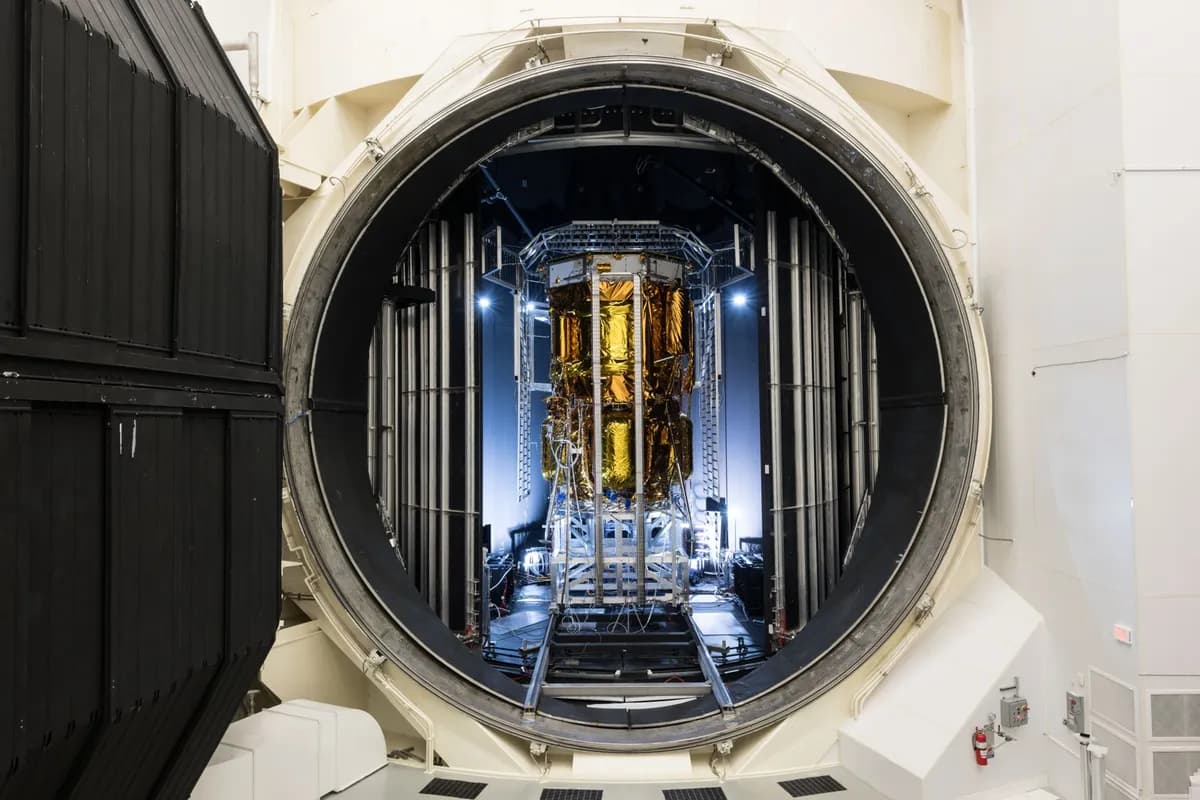
The lander is scheduled to carry two NASA science and technology payloads under the CLPS initiative to the lunar South Pole region in 2025, the agency added.
The testing is conducted in Chamber A, one of the world's largest thermal vacuum test facilities, which models the vacuum of space and extreme temperature conditions, NASA said. The tests enable evaluation of system performance and verification of structural and thermal integrity prior to launch, according to the agency. The partnership is carried out under a reimbursable Space Act Agreement, using NASA's "front door" approach that provides commercial partners access to facilities and technical expertise.
The two payloads, NASA said, include the Stereo Cameras for Lunar Plume-Surface Studies, high-resolution cameras for imaging plume-surface interaction, and the Laser Retroreflective Array, which helps orbiting spacecraft determine precise location using reflected laser light. Lessons learned from MK1's design, integration, and testing will be incorporated into future Artemis missions, the agency said, contributing to technology maturation for the larger crewed Blue Moon Mark 2 lander. Specific launch dates or additional technical details have not been disclosed.