

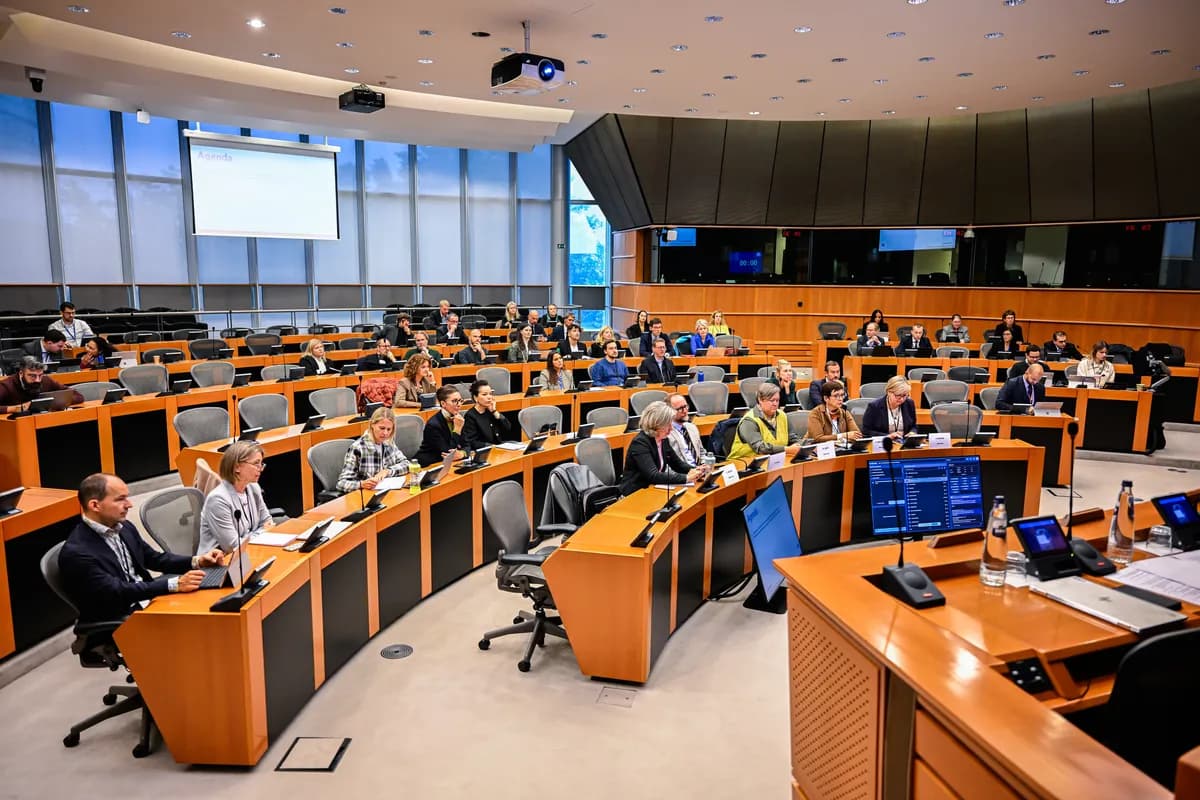
Germany and its international partners held a conference in Berlin on Wednesday to mobilize humanitarian aid for Sudan, marking three years since the war began. The conference is co-hosted by Germany, the African Union, the European Union, France, the United Kingdom, and the United States. Representatives from the German government, African countries, the United Nations, international donors, non-governmental organizations, and Sudanese civil society attended the conference. More than €1 billion has been pledged for Sudan at the conference in Berlin, eclipsing the funding target of $1 billion. The talks in Berlin are expected to help address a catastrophic funding shortfall compounding the world's worst humanitarian crisis.
Sudan faces a catastrophic humanitarian crisis with massive displacement, hunger, and poverty. More than 11 million people have been displaced in Sudan, creating the worst displacement crisis in the world. Around 28.9 million people, or 61.7% of Sudan's population, are facing acute food shortages. More than 19 million people face acute hunger as a result of the fighting, with some areas at risk of famine. Emergency levels of hunger are present across much of North Kordofan, West Kordofan, South Kordofan, and North Darfur, with some communities at catastrophic levels. The number of people needing humanitarian aid is expected to reach 22-23 million. Two-thirds of Sudan's population, or 34 million people, require assistance. Around 70% of Sudanese live in poverty, almost twice as many as before the war.
The conference focused on civilian perspectives and humanitarian aid rather than peace negotiations. Neither the Sudanese Armed Forces nor the paramilitary Rapid Support Forces were invited to the talks. The SAF and RSF have been fighting since 15 April 2023. British Foreign Secretary Yvette Cooper will urge Sudan's warring parties to 'cease bloodshed' during the conference.
Today, in Berlin, I will call for the international community to join in a shared resolve: to secure a ceasefire and a diplomatic solution, to stop the suffering, and allow the people of Sudan to determine their own peaceful future.
International funding shortfalls remain severe, though specific donor contributions were announced. Just 16% of the humanitarian funding needed for Sudan this year has been provided by the international community. Only 40% of the humanitarian aid plan for Sudan was funded in 2025, leaving a shortfall of €2.2 billion. Germany pledged €125 million in humanitarian aid for Sudan and neighboring countries at the London Sudan Conference in April 2025. Germany announced an additional €16 million in October 2025, bringing its total contribution to €141 million. Britain is set to announce new funding for Sudan, doubling UK aid to £15 million for Sudanese frontline responders.
Diplomatic tensions surfaced, with Sudan's government criticizing the conference. Sudan's army-aligned foreign ministry denounced delegates for not consulting it, accusing Western countries of a 'colonial tutelage approach'. Hundreds of protesters assembled outside Germany's foreign ministry, many chanting against the United Arab Emirates and its alleged support for the RSF. Egypt is among a number of states supporting Sudan's military, while evidence suggests the UAE is backing the RSF.
International diplomatic efforts continue, with the US emphasizing humanitarian focus. The US is not taking sides in the war and its only concern is humanitarian. The US is seeking a humanitarian truce that would allow aid to reach those in need, which should lead to a permanent ceasefire. Talks between the Quad nations, comprising the US, Egypt, Saudi Arabia, and UAE, have failed to yield meaningful progress.