

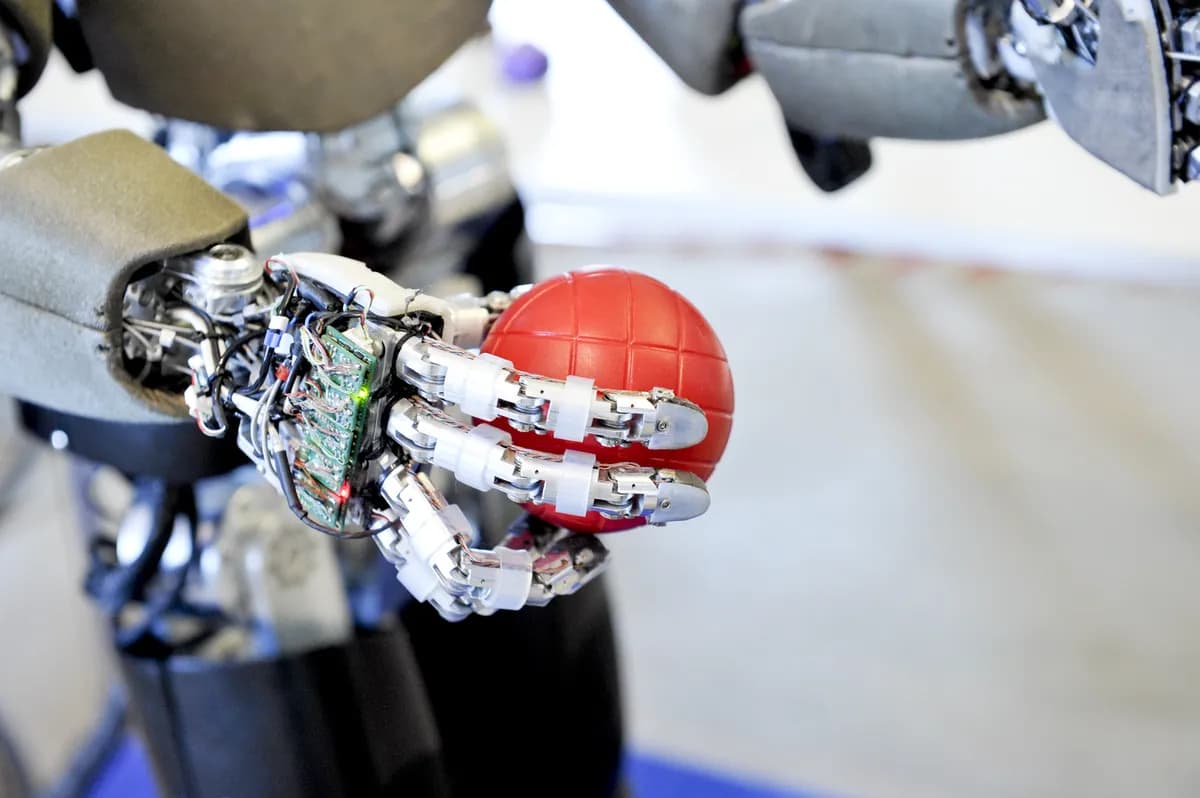
A half-marathon event where humans competed against humanoid robots was held in Beijing, aiming to showcase the rapid technological advancements and development of humanoid robots. According to major media reports, a robot named Lightning, developed by Honor, won the race, finishing the 13.1-mile (21 km) course in 50 minutes 26 seconds. That time beat the human world record of 57 minutes 20 seconds set by Jacob Kiplimo, and was more than three times faster than last year's winning robot time of 2 hours 40 minutes.
Over 100 robots or teams participated in the race, with participation surging dramatically compared to last year as the number of teams jumped nearly fivefold. Nearly half or around 40% of the robots raced autonomously without human intervention, while the race featured both remotely controlled and fully autonomous robots. Research indicates that as the world's first humanoid robot marathon event brand, this competition has reached new heights in terms of scale, technological innovation, and organizational requirements, with the number of participants, types of technology, and scope of testing all reaching historic highs. The first large-scale application of autonomous navigation technology has become a major highlight and challenge.
The technology is still in its nascent stage with more advancements expected in coming years.
Some robots faced technical issues such as tripping, collapsing, navigation errors, overheating, and falls during the race. According to research, on Saturday, almost every robot fell down and faced overheating problems, prompting their operators to switch them out for new replacements. Most of the humanoid participants didn't stay in the game for long and disappeared from the live broadcast soon after they took off from the starting line. In complex and changing environments, robots face difficulties in perceiving and making decisions within intricate surroundings, posing huge challenges to their computing power. Long-distance running places severe tests on the robots' endurance, specifically examining their long-range stamina and energy management capabilities, while dynamic balance and gait control capabilities are put to the test as robots must maintain dynamic balance at all times. Especially during high-speed running or sharp turns, the requirements for adaptive gait and millisecond-level posture correction are extremely high to prevent falls caused by shifts in the center of gravity.
According to the state media outlet Global Times, an Honor robot posted a time of 48 minutes 19 seconds but was pushed off the podium under weighted scoring rules for being remotely controlled. Xioadi Du, an engineer from Honor's winning team, said Lightning was fitted with extra-long 90 to 95 cm legs to mimic human elite runners and liquid cooling technology for heat management. Research indicates that this year's event has also seen systematic upgrades in five areas: stricter rules on human intervention, more scientific start and movement protocols, clearer scoring and penalty criteria, more standardized supply and equipment management, and tighter safety and emergency procedures.
Running faster enables technology transfer into structural reliability, cooling, and industrial applications.
Robots and humans ran in parallel tracks to avoid collisions, according to major media reports. About 12,000 human athletes ran in a half-marathon race in Beijing on Saturday, research shows. The fastest robot, Tiangong Ultra, developed by Chinese robotics company UBTech in collaboration with the Beijing Humanoid Robot Innovation Center, finished the race in 2 hours and 40 minutes, with assistants changing its batteries three times and it falling down once during the race. The slowest time allowed for human runners in the race was 3 hours and 10 minutes, and Tiangong Ultra was the only robot that barely qualified for a human participation award. Last year, only 6 out of 21 robots finished a similar race, according to major media reports. The event's organizers claim it's the first time humans and bipedal robots have run in the same race, though they jogged on separate tracks.
Research indicates that impressive-looking humanoid robots developed by several Chinese companies have made international headlines this year. Unitree, a robot firm, went viral in January after it sent an army of robots to perform synchronized dances during China's Spring Festival gala on state TV. Unitree didn't officially participate in the race, but two of its robots were running the half-marathon while being operated by other ins. Alan Fern's team's robot fell twice during a 2021 5K run, once due to operator error and another due to overheating, according to research.
The event was as much about experimentation as competition for many teams.
More than 70 teams participated in an overnight test run ahead of the official race. Organisers completed a full-process test of the world's first humanoid robot half-marathon in Beijing's E-Town, checking course navigation and battery-swap procedures. The drill comprehensively simulated core scenarios such as track passage, process scheduling, equipment coordination, and emergency support, serving as a combat-ready exercise to safeguard the official race. Of the registered teams, more than 70 participated in this test, including four international teams, with both autonomous navigation and remote-controlled teams conducting night trials on the course together. Full-process drills are required to solidify operational links, hone team coordination, and ensure the efficient operation of the event.
China aims to become a powerhouse in the humanoid robot industry, supported by policies like subsidies and infrastructure projects, according to major media reports.
Researchers who build these robots typically focus on trying to get them to complete tasks and respond effectively in a diverse range of different environments, rather than run as fast as possible.
The event generated a lot of interest and pride among Chinese people, with many human runners stopping to take selfies with Tiangong Ultra, research indicates.
There is confusion about the event's timing: major media reports state the race took place on April 19, but research indicates the 2026 Beijing E-Town Half-Marathon and Humanoid Robot Half-Marathon is scheduled to kick off on April 19.
The AI technology used in humanoids hasn't progressed very much since 2021, when my team sent a bipedal robot to run a 5K race.
Several unknowns remain about the event. The specific scoring and penalty criteria used to determine the official winners, especially regarding the disqualification of the remotely controlled Honor robot, have not been detailed. It is unclear how many robots actually finished the race, given conflicting reports on participation numbers and performance. The exact causes of the technical issues faced by the robots, such as overheating and navigation errors, and whether there are plans to address them, have not been confirmed. According to www.wired.com, Alan Fern described that the AI technology used in humanoids hasn't progressed very much since 2021, when his team sent a bipedal robot to run a 5K race, though experts disagree on whether it has progressed significantly. The specific policies and subsidies supporting China's goal to become a humanoid robot industry powerhouse have not been fully disclosed.
According to Daily Mail - Science & Tech, Mr Du described that the technology is still in its nascent stage with more advancements expected in coming years. He also described that running faster enables technology transfer into structural reliability, cooling, and industrial applications. According to Euronews, Yang Kechang described the event as being as much about experimentation as competition for many teams. According to www.wired.com, Alan Fern described that researchers who build these robots typically focus on trying to get them to complete tasks and respond effectively in a diverse range of different environments, rather than run as fast as possible. He also described that the race demonstrates how robust humanoid hardware has become, noting that until five years ago or so, we didn't really know how to get robots to walk reliably, and now we do. Additionally, he described that he would be surprised if one of these companies makes it through the half-marathon without replacing the robot.
The race demonstrates how robust humanoid hardware has become, noting that until five years ago or so, we didn't really know how to get robots to walk reliably, and now we do.
Contradictions exist regarding the number of robots that participated in the race: over 100 robots participated in the race according to some sources, while 21 humanoid robots participated according to others, affecting the perceived scale and success of the event. There is also a contradiction in the performance of robots relative to humans: the winning robot beat the human world record by nearly 7 minutes, but other reports suggest the robots were unable to keep up with the speed of the humans, highlighting conflicting narratives about robot capabilities. The event showed the reality and limitations of China's humanoid robot industry, research indicates. According to major media reports, the winning robot had to be helped back up just meters from the finish line after crashing into the railing.
I would be surprised if one of these companies makes it through the half-marathon without replacing the robot.