

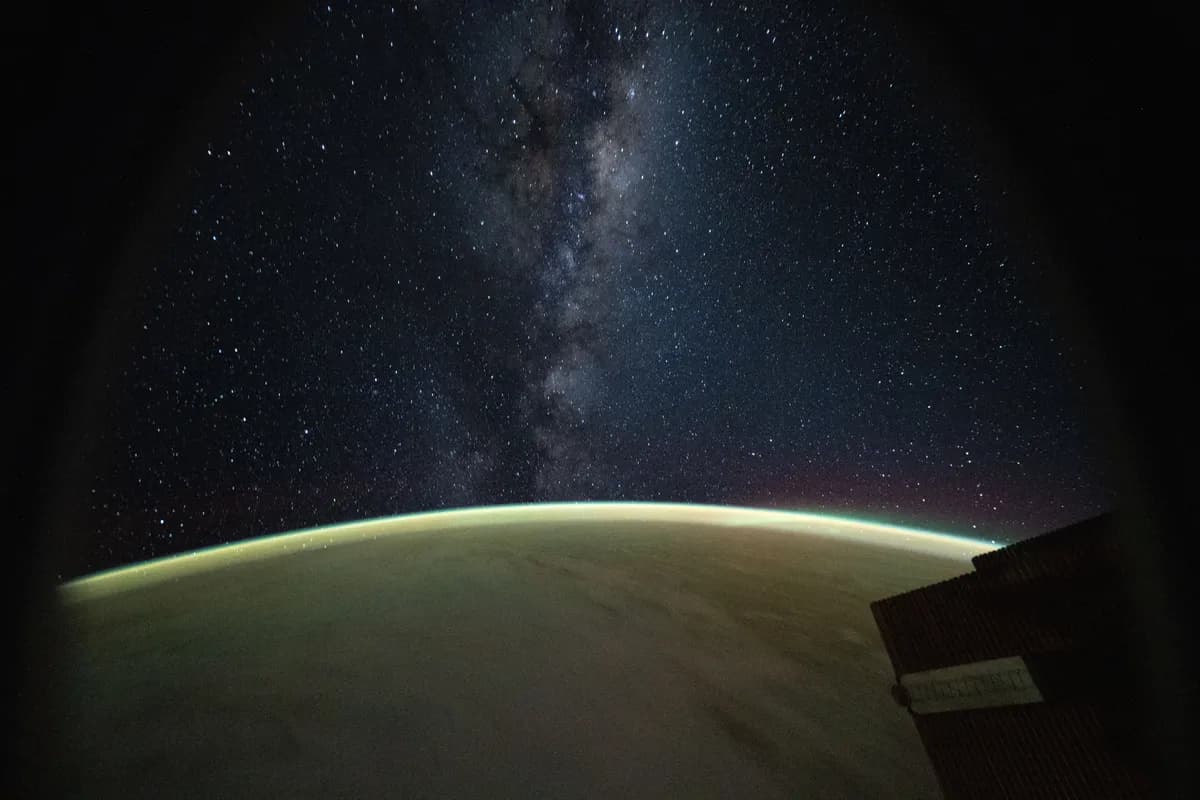
The atmospheric glow, also called airglow, occurs when atoms and molecules in the upper atmosphere, excited by sunlight, emit light to shed excess energy, according to NASA. Airglow is similar to auroras, but auroras are driven by high-energy particles from the solar wind, while airglow is energized by ordinary solar radiation. The exact location of the ISS when the image was taken has not been disclosed, nor the specific mission purpose.
Astronaut captures Milky Way and airglow from ISS
Key Points
- NASA astronaut Chris Williams captured the Milky Way and airglow from the ISS on April 13, 2026.
- Airglow is caused by sunlight-excited atoms and molecules emitting light.
- Airglow differs from auroras, which are driven by solar wind particles.