

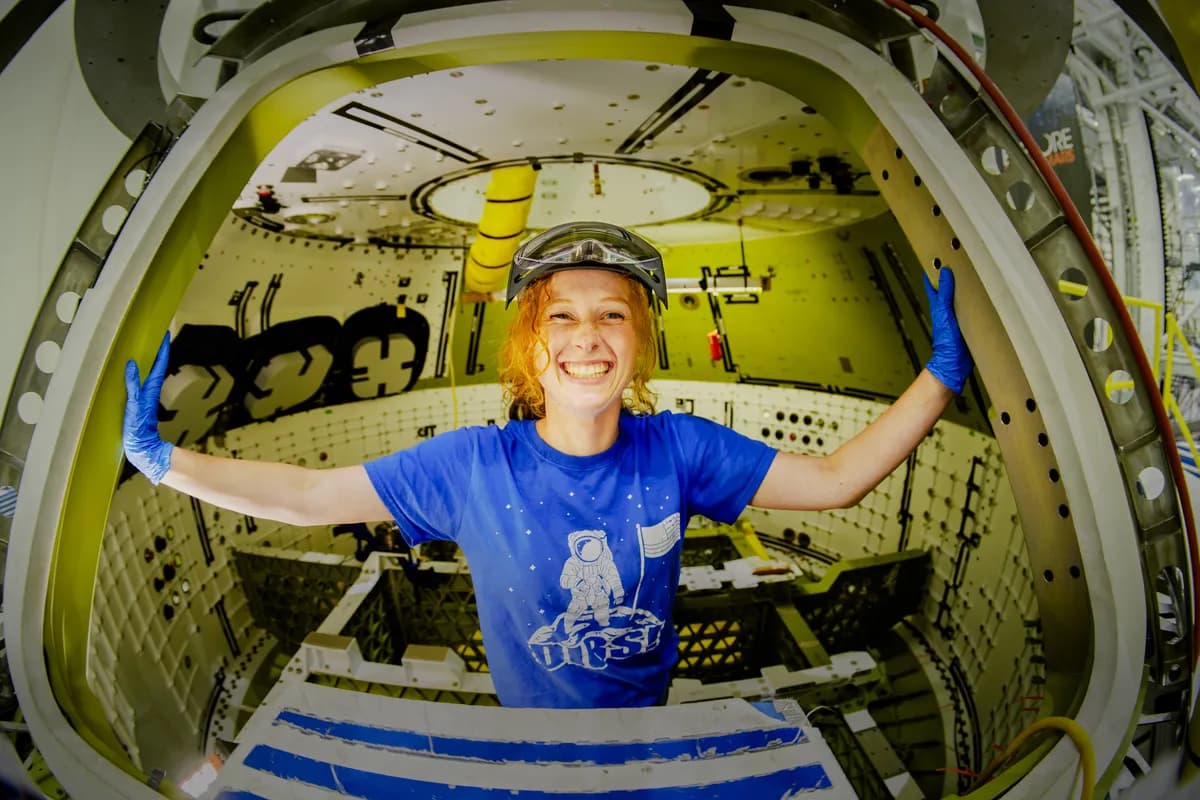
Rebekah Tolatovicz, a mechanical technician lead supporting Lockheed Martin, works for the Arctic Slope Regional Corporation at NASA's Kennedy Space Center in Florida, where she currently focuses on Orion crew modules for future Artemis missions. She played a significant part in preparing the Artemis II spacecraft, which was designed to carry four astronauts on a mission around the Moon, though its launch has been delayed. Artemis II is planned as the first crewed mission under NASA's Artemis program, involving a crewed flight around the Moon and back using a free-return trajectory.
The mission is intended to end with a safe splashdown in the Pacific Ocean, though conflicting reports suggest it may have already occurred in April 2026. The European Space Agency's European Service Module, built by European industry under ESA leadership and assembled by Airbus Defence and Space in Germany, is set to provide air, water, power, thermal control, and propulsion for the mission. According to ESA's Director for Human and Robotic Exploration Daniel Neuenschwander, the module's translunar injection burn was so precise that two planned trajectory correction burns were cancelled, highlighting its critical role.
What I really like about the area that I’m in is we do so much... From starting with the bare structure and installing giant parts and titanium pieces, to final integration where you’re installing the tiniest little components. I think that’s the coolest part. We don’t do just one technical thing — it’s all the technical things.
NASA has delayed the Artemis II mission to September 2025, citing crew safety as the top priority, according to NASA officials. Delays are attributed to work on Starship progress, propellant transfer, spacesuit development, and other challenges, as stated by NASA Associate Administrator Jim Free. Issues with the Orion spacecraft for Artemis II include heat shield pieces being 'liberated' during the Artemis I reentry, concerns about batteries in the abort system being damaged, and a design flaw in motor valve circuitry affecting components like the carbon dioxide scrubber, according to NASA engineer Amit Kshatriya.
Before any potential launch, technical issues have emerged, including a faulty toilet in the spacecraft and a communications issue with the flight termination system that was resolved using Space Shuttle hardware, according to multiple reports. Additionally, a higher-than-expected temperature reading in the launch abort system was observed but judged not to affect launch, though it added to pre-launch challenges. During a rehearsal, technical issues included a leak forcing teams to stop liquid hydrogen flow into the SLS rocket core stage, a valve requiring retorquing, and audio communication dropouts, as reported by research sources.
At first I didn’t think I was going to make it... But if you come in with a good attitude and want to learn — there’s so much you can learn from these guys, they have decades of knowledge to share. Once I got down on the floor and was working with them hands-on, I knew I could figure it out.
NASA is targeting March for a potential Artemis II launch after technical issues during a launch rehearsal, but the agency is also planning for a potential April launch, indicating conflicting reports about the near-term schedule. 4 kilometers and could help preserve the planned April launch window. NASA is continuing work on the SLS rocket and Orion spacecraft before a second rollout to the launch pad later in March ahead of a potential April launch, though the exact timing remains unclear amid ongoing technical assessments.
Rebekah Tolatovicz's typical workday involves activities in NASA Kennedy's Operations and Checkout Building, including coordinating technicians, hands-on installations, and collaborating with engineers, according to official sources. She began her career as an intern with Lockheed Martin through Eastern Florida State College's aerospace technician program and was mentored by technicians who worked through the space shuttle era. She has witnessed her work come to fruition on Orion's uncrewed Artemis I test flight and the Artemis II mission, though the latter's status is disputed.
It’s really amazing for me to be a part of NASA’s history and the next step... I just really love my job, the team, and working through challenges. You don’t think about it when you’re putting things on, but then you get to tell somebody else that you installed the...
As a crane operator, Rebekah Tolatovicz lifted the Artemis II Orion spacecraft out of the altitude chamber on April 27, a critical task in spacecraft assembly. Orion crane operators are certified after classroom and on-the-job training, ensuring precision in handling sensitive components, according to research sources. The Artemis program aims to build on Artemis II with Artemis III, a crewed lunar landing using SpaceX's Starship lander, as per research sources.
Mission success for Artemis II relies heavily on international contributions, particularly from the European Service Module, which provides essential systems for the spacecraft. According to ESA's Director for Human and Robotic Exploration Daniel Neuenschwander, the module's performance during testing has been exceptional, potentially reducing the need for mid-course corrections. The Artemis II crew entered quarantine on January 21 and has been released while technical issues are addressed, according to research sources.
NASA will host a news conference on March 12 to highlight progress toward Artemis II, according to official sources. NASA spent over $23 million developing the Universal Waste Management System for Artemis missions, according to research sources. The current official launch date for Artemis II remains unclear, with sources reporting delays to September 2025, targets for March or April launches, and even claims of a successful launch in April 2026, creating confusion about the mission's timeline.
Specific technical issues that remain unresolved for Artemis II include the heat shield erosion, abort system battery concerns, and valve circuitry flaws, but their exact impact on crew safety and mission readiness is not fully detailed. The status of the Artemis II crew's quarantine and training is partially known, with their release from quarantine reported, but details on their current activities and readiness levels are lacking. How the reported delays and technical challenges affect the overall timeline and budget for the Artemis program, including Artemis III and IV, is not explicitly stated, though potential ripple effects are likely.
The exact role and certification process for crane operators like Rebekah Tolatovicz in the Orion spacecraft assembly are described broadly, but their criticality to mission success is not quantified in available reports.