

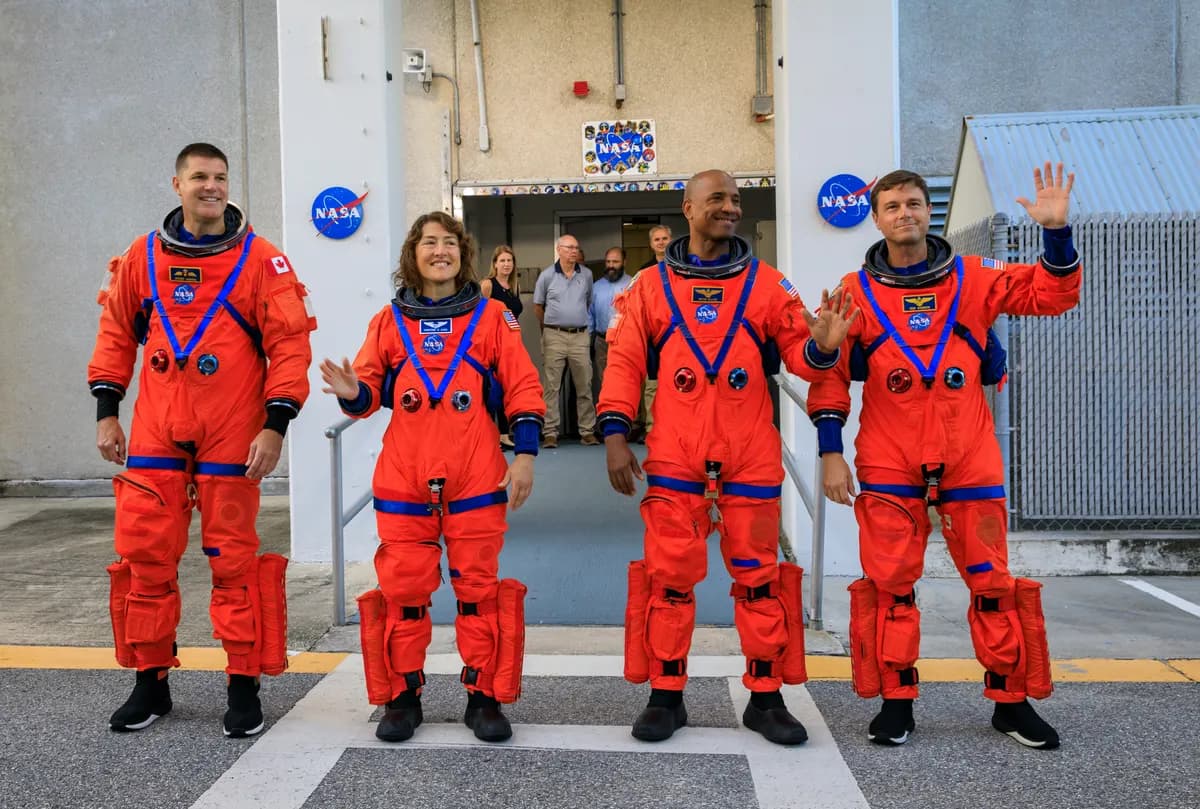
NASA astronauts Reid Wiseman, Victor Glover, Christina Koch, and Canadian astronaut Jeremy Hansen completed their mission, which concluded with a splashdown in the Pacific Ocean late Friday night off the coast of California. The crew spoke out for the first time after returning to Earth, with the four astronauts on board the Orion spacecraft having completed their journey around the moon and splashing down near San Diego around 20:00 Friday US EDT. According to www.bbc.com, the Artemis II crew described having many more pictures and stories to share with the world as they prepared to return to Earth, while Victor Glover noted that much data was coming back with them.
The mission achieved historic milestones, as the Artemis II spacecraft, Orion, broke the record for human travel at about 13:56 EDT on Monday, surpassing a distance of 248,655 miles held since 1970 by the Apollo 13 mission. The spacecraft was not planning to land on the moon but to fly around its far side, making the astronauts the first human eyes to see some parts of that region's surface, including its vast craters and lava plains. During the mission, Reid Wiseman told www.bbc.com that the crew had scientific work to do during 40 minutes of profound solitude when they lost contact with Earth, and they took a moment to share maple cookies and reflect on their location.
We are bonded forever. And no one down here is ever going to know what the four of us just went through. It was the most special thing that will ever happen in my life.
Artemis II is NASA's first crewed mission under the Artemis program and will launch from Kennedy Space Center in Florida, according to research from five sources. The mission will launch on NASA's Space Launch System rocket and test the Orion spacecraft's life support systems for the first time with humans aboard, as confirmed by the same research. This program aims to pave the way for future lunar exploration and eventual missions to Mars, building on decades of spaceflight experience.
Conflicting reports surround the mission's status and launch dates, creating uncertainty about whether it has already occurred or is still upcoming. NASA states that the Artemis II launch is targeted for no earlier than 6:24 p.m. EDT Wednesday, April, with a two-hour launch window and additional opportunities through Monday, April 6, but research from five sources indicates that NASA delayed the Artemis 2 launch by nearly a year to September 2025 due to issues with Orion. Additionally, NASA had initially planned to launch Artemis II in February 2026, according to research from five sources, further complicating the timeline. These discrepancies highlight ongoing challenges in mission planning and public communication.
I and crewmates are inescapably, beautifully, dutifully linked after our mission to fly by the moon.
Technical issues have plagued preparations for the mission, with an issue with liquid propellant arising and, a few days later, the SLS facing another problem with the rocket's upper stage, forcing a rollback from the pad, as reported by research from five sources. On Feb. 2, during Artemis II's first wet dress rehearsal, engineers detected a hydrogen leak at the interface of a service mast, with the cause attributed to moisture accumulated in the Teflon seal of two interfaces between the mast and the vehicle's tank, according to the same research. NASA decided to postpone the launch until March 6 after the hydrogen leak, and a new wet dress rehearsal took place on Feb. 19 to verify everything was working as expected.
Further technical problems emerged when, a couple of days after the second wet dress rehearsal, engineers found the interim cryogenic propulsion stage was leaking helium, as noted by research from five sources. These issues echoed challenges the SLS encountered ahead of the Artemis I mission in 2022, which launched nearly six years after NASA's original target date and accumulated 25 scrubbed or delayed launch attempts, according to research from five sources. The persistence of such problems raises questions about the reliability of the rocket system for future missions.
We have many more pictures and many more stories to share with the world as we prepare to return to Earth.
Ground systems and infrastructure concerns also pose potential delays, with refurbishment of items like a mobile launch platform possibly affecting the schedule for Artemis 2, as indicated by research from five sources. A GAO report found that work on the Exploration Ground Systems program could delay the Artemis 2 launch, and NASA has been working on upgrades and repairs to ground systems after the Artemis 1 launch in November 2022, according to research from five sources. These factors add layers of complexity to the mission's readiness and timeline.
Industry skepticism contrasts with NASA's official stance, as there is widespread doubt that Artemis 2 will launch as planned next September, but agency leaders continue to state that the mission is on schedule, per research from five sources. NASA Administrator Bill Nelson reiterated the September 2025 launch date for Artemis 2 during a talk at the International Astronautical Congress, emphasizing the agency's commitment to the timeline. This divergence in perspectives underscores the challenges in balancing technical realities with programmatic goals.
We have to get back. There's so much data that you've already seen, but all the good stuff is coming back with us.
Media coverage and public engagement plans are extensive, with NASA providing live coverage of prelaunch, launch, and mission events for the Artemis II crewed test flight around the moon. Briefings, events, and 24/7 mission coverage will be on NASA's YouTube channel, and events will each have their own stream closer to their start time, while viewers can watch agency launch, lunar flyby, and splashdown coverage on NASA+ and Amazon Prime. The deadline for media accreditation for in-person coverage of launch and mission events has passed, limiting access for some outlets.
Upcoming briefings and events are scheduled to begin on Thursday, April 2, from NASA Johnson, and on Friday, March 27, the Artemis II crew will arrive at Kennedy and answer questions from credentialed media, with NASA Administrator Jared Isaacman and CSA President Lisa Campbell also attending. These sessions aim to provide updates and insights into the mission's progress and findings. Throughout February 2026, people at the Kennedy Space Center witnessed NASA's SLS rocket standing on the launch pad, according to research from five sources, highlighting public interest in the program.
We had a lot of scientific work to do during the 40 minutes of profound solitude when we lost contact with Earth.
Political reactions included President Trump speaking with the Orion team and congratulating them after the flyby, as reported by research from five sources. This recognition underscores the mission's significance in national and international space efforts. The crew's reflections added a personal dimension, with Reid Wiseman stating that the crew is bonded forever after their unique experience, and Christina Koch noting that she and her crewmates are inescapably linked after their mission to fly by the moon.
The implications for the Artemis program timeline remain uncertain, as delays and technical challenges could affect subsequent missions like Artemis 3. Key unknowns include whether the technical issues such as the hydrogen leak and helium leak are fully resolved and how they impact the mission timeline, as well as what specific data or scientific findings the Artemis II crew brought back from the mission. Additionally, the definitive planned launch date for Artemis II is unclear given conflicting reports of April, September 2025, and February 2026, and the current actual status of the mission—whether completed or upcoming—remains ambiguous due to contradictory information. According to www.bbc.com, Victor Glover described the greatest gift of the mission as seeing the lunar eclipse from beyond the far side of the moon, and Reid Wiseman noted that the pinnacle moment was when his team named a lunar crater after his late wife, Carroll, adding emotional depth to the scientific achievements.
We took a moment to share maple cookies and reflect on where we were.
The greatest gift of the mission was seeing the lunar eclipse from beyond the far side of the moon.
The pinnacle moment was when my team named a lunar crater after my late wife, Carroll.