

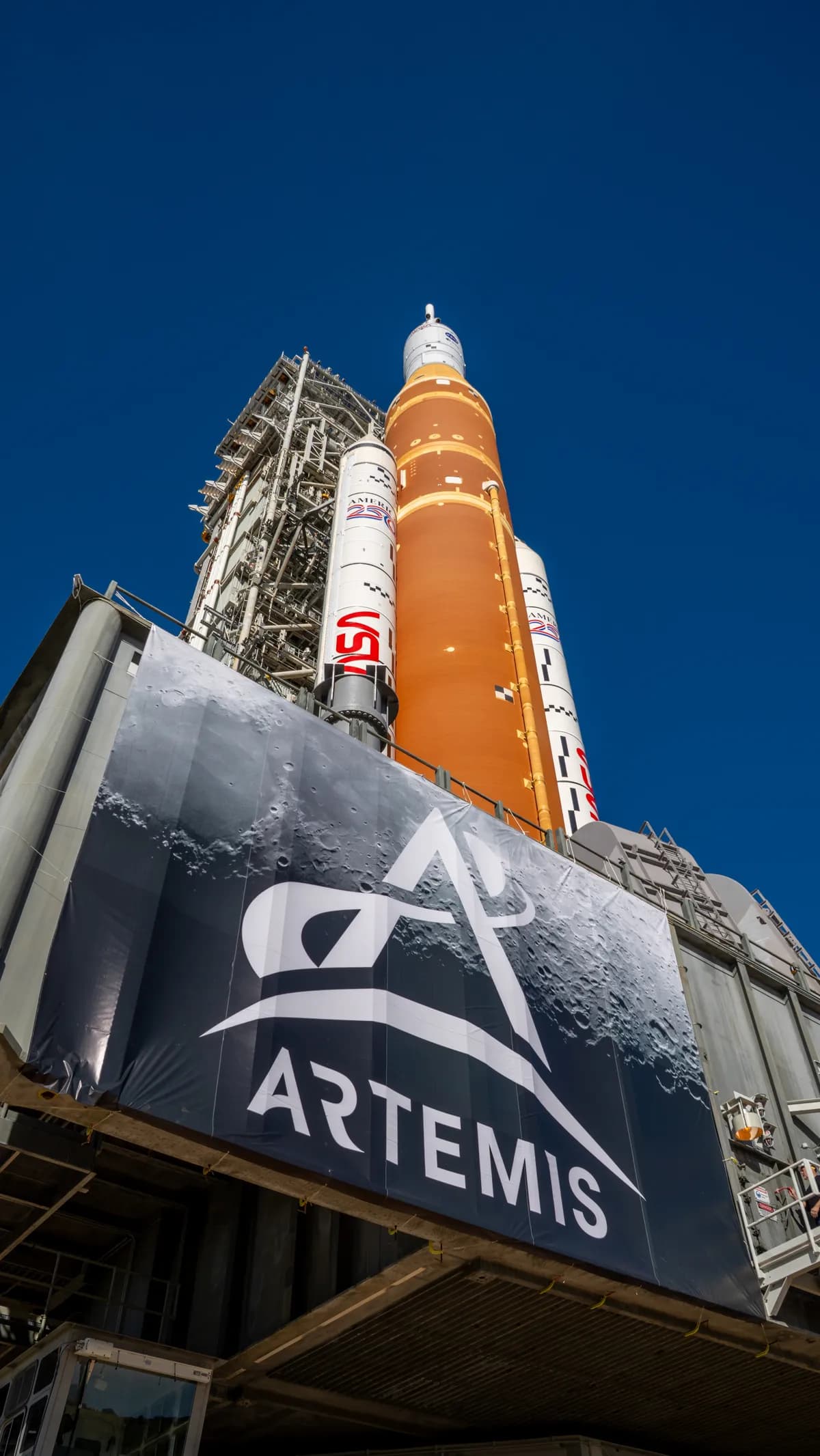
The Artemis program, NASA's ambitious return-to-the-moon initiative, has faced years of delays, technical hiccups, and budget cuts, according to major media reports. This has prolonged the wait for a new generation of astronauts to walk where Neil Armstrong once did in 1969. The last human moonwalk occurred during the Apollo 17 mission in 1972. The program was initiated under the Trump administration in 2017, with space officials tasked to collaborate with commercial companies like SpaceX to build a lunar-orbiting Gateway outpost. The project's first mission, Artemis I, successfully completed an uncrewed Orion capsule flight around the moon in 2022.
Artemis II represents a significant milestone as NASA's first crewed mission under the Artemis program and will launch from Kennedy Space Center in Florida. Unlike the Apollo missions, this mission will not land on the moon but will conduct a 10-day trip around it, flying about 4,700 miles beyond the far side to surpass the distance record set by Apollo 13 in 1970. It will be the first crewed mission to leave Low Earth Orbit in 53 years and the first time astronauts launch on NASA's giant Space Launch System rocket and travel around the moon inside the Orion crew capsule. The mission serves as preparation for Artemis III, scheduled for 2028, which aims to achieve the first human moon landing since 1972.
Recent launch preparations have seen the Artemis II astronauts engage in traditional preflight activities. According to major media, the crew waved goodbye to their families and friends, with astronaut Victor Glover seen mouthing 'I love you' to family members wearing matching t-shirts before boarding a shuttle bus. They boarded the astrovan for the 9-mile ride to launch pad 39B, waving to colleagues and news photographers. Before their walkout, commander Reid Wiseman and his crew played a quick card game with NASA's chief astronaut Scott Tingle, a preflight tradition since the space shuttle era where losing is considered good luck to dispel bad omens. The four astronauts thanked suit technicians, posed for photos while maintaining distance to avoid germs, then descended an elevator and walked out to a barrage of cameras and cheers.
Technical issues have caused significant delays, with flight officials pulling the Artemis II Space Launch System and Orion spacecraft off the launch pad at Kennedy Space Center on Feb. 25 after a recurrence of helium flow problems, pushing the launch back to April at the earliest. NASA announced on March 3 that it identified the latest problem as a faulty helium seal in the SLS upper stage and is repairing the assembly while making other fixes to the spacecraft. The upper stage uses helium to maintain proper environmental conditions for the engine and to pressurize liquid hydrogen and liquid oxygen propellant tanks. Although the systems worked during Artemis II wet dress rehearsals, teams could not properly flow helium during normal operations after the rehearsal concluded on Feb. 19. Teams are reviewing potential causes, including issues in the interface between ground and rocket lines, a valve in the upper stage, and a filter between the ground and rocket.
Launch schedule uncertainty persists, with conflicting reports about the target date. Research indicates NASA said on Friday it was planning to launch the delayed Artemis II moon mission on March 6 after successfully completing a fueling test that caused it to stand down earlier. However, other research sources state the launch is targeted for no earlier than 6:24 p.m. EDT Wednesday, April 2025, with a two-hour launch window. The mission's four astronauts entered a second period of quarantine on Friday in anticipation of the new target launch date. NASA is taking steps to potentially roll back the rocket and spacecraft to the Vehicle Assembly Building after observing interrupted helium flow on Feb. 21. A rollback would mean NASA will not launch in the March window but could preserve the April window if required.
NASA will provide live coverage of prelaunch, launch, and mission events for the Artemis II crewed test flight around the moon. Briefings, events, and 24/7 mission coverage will be on NASA's YouTube channel, with individual streams closer to start times. The agency's launch, lunar flyby, and splashdown coverage can also be watched on NASA+ and Amazon Prime. The deadline for media accreditation for in-person coverage of launch and mission events has passed. Beginning Thursday, April 2, briefings will occur from NASA Johnson, and the Artemis II crew will arrive at Kennedy on Friday, March 27 to answer questions from credentialed media.
Major progress
Before NASA sends its astronauts on Artemis II, the launch team at Kennedy Space Center will begin counting down about two days before liftoff. A launch countdown contains 'L Minus' and 'T Minus' times, with 'L minus' indicating how far away liftoff is and 'T minus' being a sequence of events built into the countdown. Pauses in the countdown, or 'holds,' are built in to allow the launch team to target a precise launch window and provide cushion time.
Artemis II will test the Orion spacecraft's life support systems for the first time with humans aboard. This equipment was one of the main reasons Artemis II was postponed by more than a year, with NASA citing issues with Orion's life support system, according to major media.
One of the more pressing issues with the Artemis program is its dependence on SpaceX's Starship Human Landing System as the initial human lander for Artemis III. Elon Musk's company signed a contract with NASA in 2021 to provide the lander but struggled in 2025 to perfect the mammoth Starship V3 rocket necessary for a key element of the HLS mission. The Starship V3 development is deemed crucial for transferring fuel to an orbiting tanker, and its performance will determine the number of refueling missions required, now pegged at roughly 12 fueling flights.
Recent Boeing Starliner failures have highlighted challenges in NASA's commercial crew partnerships. NASA acknowledged in a damning report published on Thursday a succession of failures on Boeing's ill-fated Starliner capsule that left two astronauts stuck on the International Space Station for nine months. The first crewed test launch of Starliner in June 2024 was part of what Isaacman designated a 'Type A mishap' – its most serious classification. NASA astronauts Suni Williams and Butch Wilmore finally returned to Earth in March 2025 after an extended stay on the ISS caused by severe technical failures on Starliner.
The lag time since the last crewed U.S. spaceflight has now stretched to three full years, emphasizing the significance of Artemis II in restoring American human spaceflight capabilities.
Uncertainties remain regarding the exact launch date, with conflicting reports of March 6 and April 2025 creating confusion. The specific technical issue causing delays is unclear, with reports pointing to helium flow problems, while NASA's newly confirmed administrator Jared Isaacman cited 'major progress' since a wet dress rehearsal where engineers discovered liquid hydrogen leaking from the SLS rocket. It is also unknown whether the Artemis II rocket will be rolled back to the Vehicle Assembly Building and how this would affect the schedule. The number of refueling missions required for the Starship Human Landing System for Artemis III, estimated at roughly 12 flights, has not been confirmed, and the specific fixes to Orion's life support system and SLS rocket remain unspecified.