

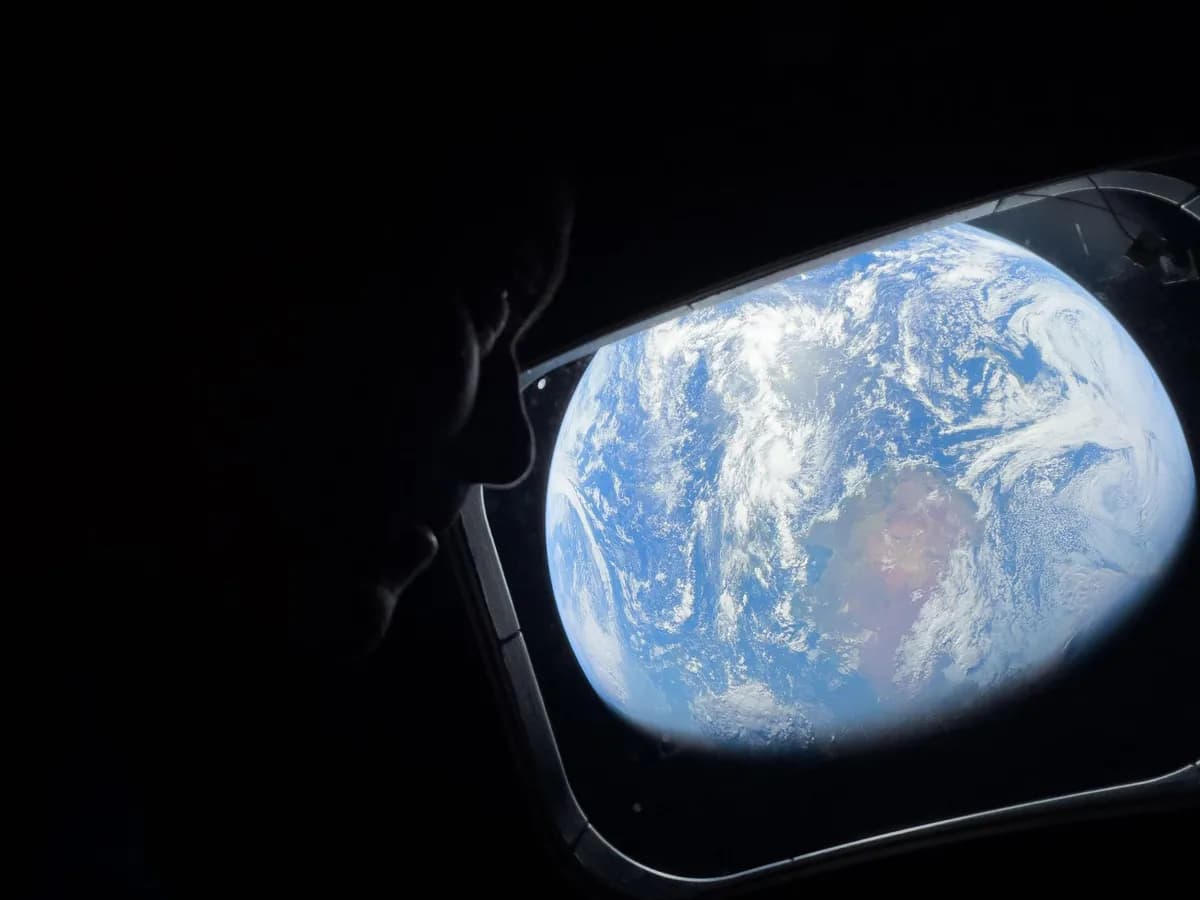
Artemis II astronauts Reid Wiseman, Victor Glover, Christina Koch, and Jeremy Hansen lifted off at 6:35 p.m. EDT on April 1 from launch pad 39B at Kennedy Space Center in Florida, according to multiple reports. The mission is an approximately 10-day journey around the Moon including launch, a lunar flyby, and a safe splashdown off the coast of San Diego, with the crew expected to travel a total of 695,081 miles from launch to splashdown. This first crewed test flight represents a significant milestone in NASA's renewed lunar ambitions, building upon decades of spaceflight experience since the Apollo era.
At about 7:02 p.m. EDT (2302 GMT), the Artemis 2 crew made their closest approach to the moon, coming within 4,067 miles of the lunar surface, according to multiple sources. Just minutes earlier, at 6:44 p.m. EDT (2244 GMT), the Artemis 2 Orion spacecraft flew behind the moon and out of range with Earth communications, with a planned loss of signal lasting 40 minutes. As the Artemis astronauts passed behind the Moon, they lost contact with Earth for about 40 minutes due to radio and laser signals being blocked, a phenomenon familiar from previous lunar missions.
The spacecraft passed within approximately 4,066 miles of the lunar surface during its closest approach and reached a maximum distance of 252,757 miles from Earth, according to mission specifications. Artemis 2 uses the SLS rocket, described as the most powerful ever to carry people, and the Orion spacecraft with critical systems provided by the European Service Module. The Artemis astronauts could travel farther in space than any humans in history, potentially breaking Apollo 13's record, though the exact maximum distance achieved has minor reporting variations of about one mile that do not affect the mission's overall achievement.
Artemis 2 includes groundbreaking diversity with the first woman (Christina Koch), first Black man (Victor Glover), and first non-American (Canadian Jeremy Hansen) on a lunar mission, along with commander Reid Wiseman. The mission is a test flight that will travel to the Moon, explore its far side without landing, and return to Earth in about 10 days, serving as a crucial demonstration of systems and procedures. This crew composition reflects NASA's commitment to broadening participation in space exploration while maintaining the highest standards of astronaut selection and training.
During the mission, Amit Kshatriya acknowledged a control issue with the toilet on the Orion spacecraft, which the crew later resolved with mission control. According to english.elpais.com, communication with the spacecraft was lost briefly during liftoff, though the reason remains unknown, with communication re-established and the mission continuing without incident. The resolution of these in-flight challenges demonstrates the robustness of spacecraft systems and the effectiveness of real-time troubleshooting between crew and ground control.
Mission Control is not concerned about issues during the loss of signal period because they know the spacecraft's location and trajectory.
Historical parallels exist with Apollo astronauts also experiencing loss of signal during lunar missions, with Apollo 11's Michael Collins describing feelings of solitude but not fear during his 48-minute blackout. Artemis 2 represents the first crewed mission to the Moon since December 1972 when Apollo 17 completed the last human lunar landing, ending a 52-year hiatus in human travel beyond low Earth orbit. This historical context underscores both the technical continuity and evolutionary advancements between the Apollo and Artemis programs.
NASA announced a series of transformative agencywide initiatives at its 'Ignition' event on Tuesday, according to the agency. These initiatives are designed to achieve President Donald J. Trump's National Space Policy and advance American leadership in space, NASA confirmed. According to Amit Kshatriya, NASA is aligning around the mission, shifting to a focused, phased architecture on the Moon, building a competitive commercial ecosystem in low Earth orbit, opening the lunar surface to researchers, and investing in nuclear propulsion and workforce.
The announcements build on recent updates to the Artemis program, including standardizing the SLS rocket configuration, adding an additional mission in 2027, and undertaking at least one surface landing every year thereafter, according to research from two sources. Artemis III, scheduled for 2027, will focus on testing integrated systems and operational capabilities in Earth orbit in advance of the Artemis IV lunar landing, multiple reports indicate. These programmatic developments suggest an accelerating timeline for establishing sustained human presence on the lunar surface.
According to major media reports, US President Donald Trump spoke with Artemis II astronauts after their successful loop around the moon in a record-breaking trip. During a press conference, Trump stated that people haven't been to the Moon in a long time but it will become more prevalent, with plans for increased travel and ultimately a trip to Mars, referring to the astronauts as modern-day pioneers.
The mission serves as a critical test of spacecraft systems and human adaptation to deep space conditions, with results informing preparations for future lunar landings. According to www.space.com, Rick Henfling described Mission Control as not concerned about issues during the loss of signal period because they know the spacecraft's location and trajectory. This confidence reflects extensive pre-mission planning and simulation of various contingency scenarios.
Several unknowns remain regarding the mission and broader program, including what specific tests are being conducted on the Orion spacecraft during the deep space phase. The detailed plans and timeline for establishing a Moon base as part of the Artemis program have not been fully disclosed, nor has how NASA's investment in nuclear propulsion will specifically advance future missions to Mars. Additionally, the competitive commercial ecosystem in low Earth orbit that NASA aims to build, including which companies are involved, requires further clarification.