

Artemis II commander Reid Wiseman broke NASA protocol by taking the crew's mascot Rise from the Orion capsule after splashdown. According to NASA's plan, the stuffed toy should have remained aboard the Integrity spacecraft to be retrieved at a later date. After 10 days travelling through space together, Wiseman couldn't face leaving Rise behind, and the mascot now remains with Wiseman and his two daughters, Ellie and Katey.
Rise is what NASA calls a zero-gravity indicator – small, soft toys that start to float when the spacecraft has left Earth's pull. Its design was created by Lucas Ye, a year three student from California, selected from over 2,600 entries sent in from over 50 countries. Inside Rise carries an SD card storing the names of more than five million people who wanted their names to be sent around the moon. Rise has been a constant companion for the crew from conferences and press tours before the trip to their 10-day mission around the moon.
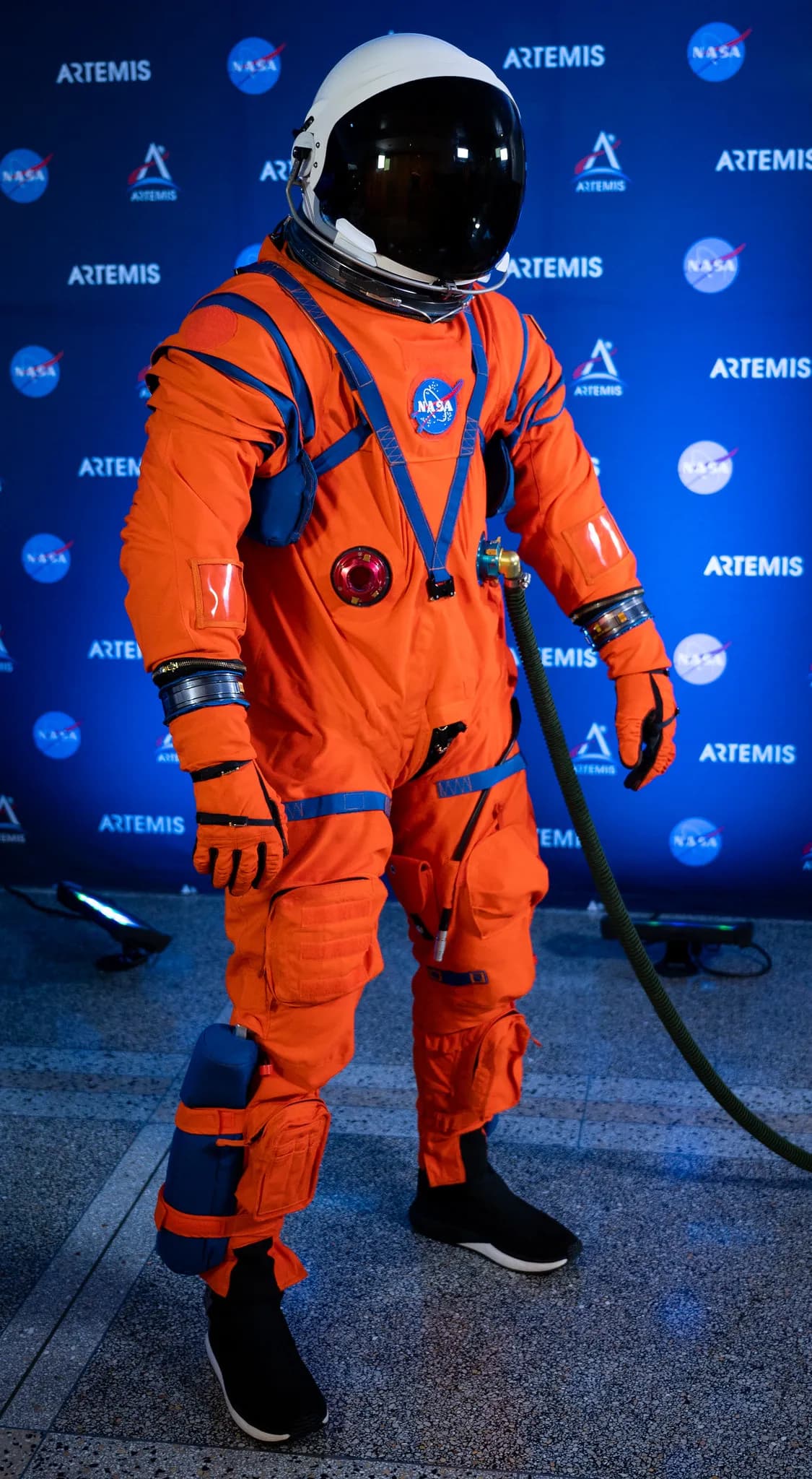
During splashdown, Wiseman stuffed Rise in a dry bag from the survival kit and hooked it onto his pressure suit. He securely fastened Rise to his suit before being hoisted from a raft into a waiting US Navy helicopter, as Wiseman was lifted by helicopter to the USS John P. Murtha after splashdown. Wiseman was seen clutching Rise aboard the USS John P. Murtha and at Ellington Field near NASA's Johnson Space Centre. Rise appeared in a photo posted of Wiseman in a car with his two daughters, captioned 'Mission complete.'
I was supposed to leave Rise in Integrity... but that was not something I was going to do.
On social media, space enthusiasts have lauded Wiseman's decision, calling Rise the 'fifth member' of the Artemis II crew. Space fans often saw Rise drifting around the cabin of the Orion crew capsule or being held by the crew during calls back to Earth.
The Artemis II crew safely landed in the Pacific Ocean on April 10 after a 10-day lunar mission, with splashdown occurring off the coast of California at 8.07 pm ET. Artemis II astronauts are Reid Wiseman, Victor Glover, Christina Koch, and Jeremy Hansen, on a less than 10-day mission beyond the moon and back.
However, Artemis II faced delays and pre-launch issues, including being pulled off the launch pad on Feb. 25 due to a recurrence of helium flow problems, pushing the launch back to April at the earliest. In February 2026, NASA's SLS rocket was on the launch pad for Artemis II, but had to roll back due to issues with liquid propellant and the rocket's upper stage. On Feb. 2, during Artemis II's first wet dress rehearsal, a hydrogen leak was detected at the interface of a service mast, attributed to moisture in a Teflon seal. NASA postponed the launch to March 6 after the hydrogen leak, with a new wet dress rehearsal scheduled for Feb. 19, but during the second wet dress rehearsal, hydrogen operations proceeded smoothly, while later a helium leak was found in the interim cryogenic propulsion stage. NASA identified the latest problem with Artemis II as a faulty helium seal in the SLS upper stage and is repairing it, and just about an hour before Artemis II's launch, NASA issued a statement about an issue with communication to the flight termination system.
It's hard not to love this little guy. I can't let Rise out of my sight…currently tethered to my water bottle.
NASA's moon landing program has experienced a recent delay, representing the latest in a string of technical, budgetary, workforce, and public perception challenges. Artemis I launched nearly six years after NASA's original target date, with 25 scrubbed or delayed attempts, partly due to recurring hydrogen leaks. NASA is delaying Artemis 2 to as late as May 2024, from a previous schedule of 2023, due to pandemic impacts, supply chain issues, storm damage, and hardware delays.
Contradictions exist in the moon landing timeline, as NASA is aiming for a moon landing near the lunar south pole in 2028, but NASA has formally given up on the goal of returning humans to the moon by 2024, pushing it back to at least 2025. Artemis II faced delays, and NASA officials announced a shake-up of the larger program's timeline. NASA rebaselined the Orion program with a new cost of $9.3 billion from fiscal year 2012 through Artemis 2.
The Artemis program depends on SpaceX's Starship Human Landing System (HLS) as the initial human lander. SpaceX struggled in 2025 to perfect the Starship V3 rocket necessary for the HLS mission, according to a NASA Aerospace Safety Advisory Panel report. The Starship V3's performance will determine the number of refueling missions required for the HLS mission, now pegged at roughly 12 flights.
Broader program implications include workforce and public support concerns, as the lag time since the last crewed U.S. spaceflight has stretched to three full years, raising concerns about public support. NASA's launch team loaded more than 700,000 gallons of fuel into the SLS rocket early Wednesday for a planned evening launch.
It remains unknown what specific consequences, if any, Reid Wiseman will face for breaking NASA protocol by taking Rise, and the current official launch date for Artemis II is unclear given conflicting reports of delays and a completed mission. Technical and budgetary challenges persist, with unknowns including how many refueling missions will ultimately be required for the Starship Human Landing System and whether the estimate of roughly 12 flights is still accurate, the exact cause and resolution status of the helium and hydrogen leaks reported in the SLS rocket during Artemis II preparations, and how NASA has addressed the budget shortfall for the Human Landing System and what impact it has on the overall Artemis timeline.