

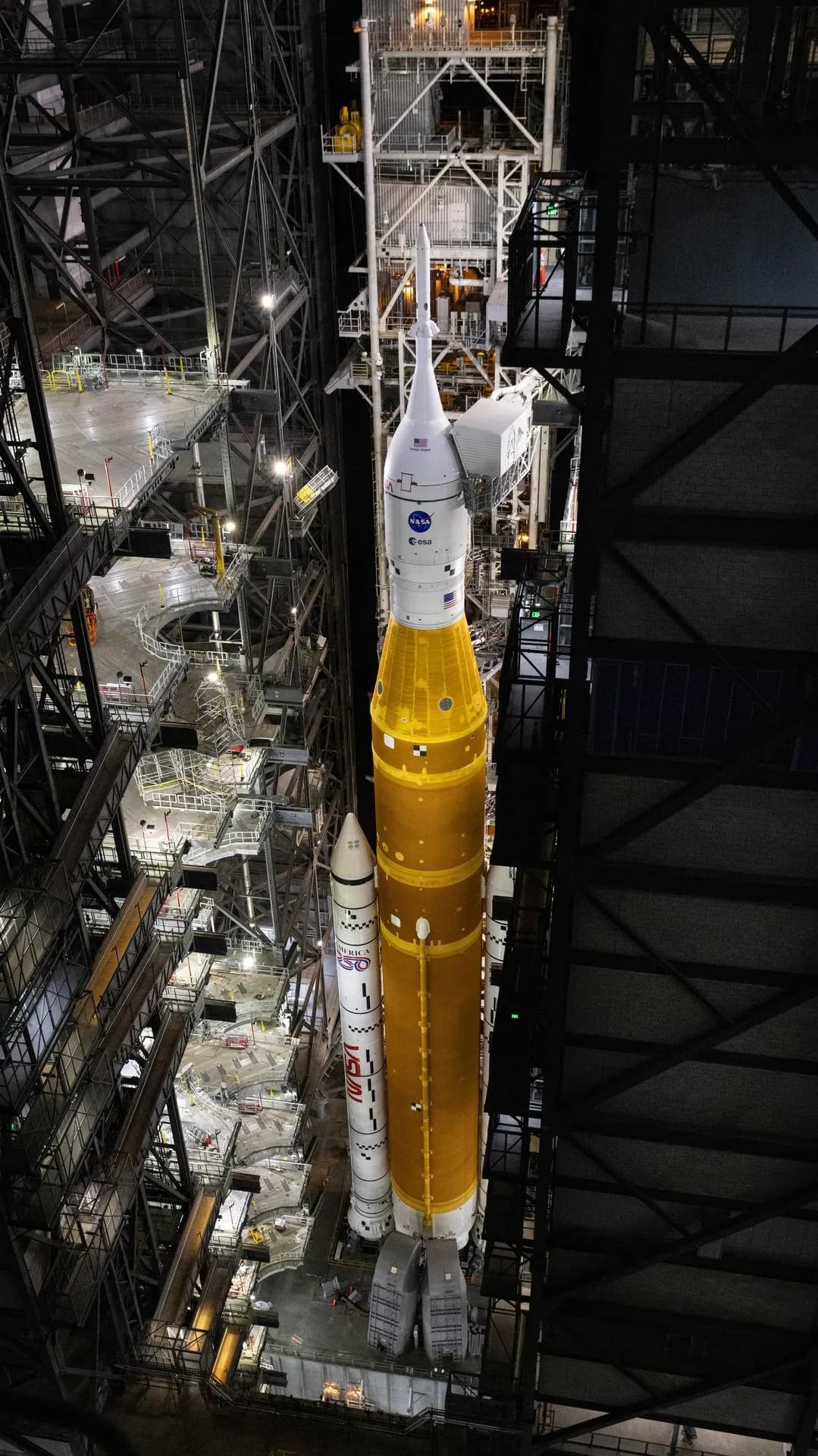
The Artemis 2 mission faces a critical moment with the translunar injection burn to send Orion toward the moon, according to research from five sources. If successful, Artemis 2 will be the first crewed flight beyond low Earth orbit since the Apollo era, multiple reports indicate. This mission also marks the first lunar fly-around in over 50 years, adding historical significance to its objectives.
During the early mission phase, technical issues emerged, including a toilet problem after liftoff. Mission specialist Christina Koch is working to fix Orion's space toilet, which has a fan issue, according to research from five sources. Orion has separated from the SLS rocket's upper stage and is flying on its own, multiple reports confirm, though the severity of the toilet issue and its impact on operations remain unknown.
Crew activities have included Artemis 2 pilot Victor Glover manually flying the Orion spacecraft around the upper stage of the SLS rocket, according to research from five sources. According to www.space.com, Victor Glover described the Orion as flying very nicely and being very responsive. The astronauts will use the Universal Waste Management System, a new toilet design developed for this mission, as multiple reports indicate.
Pre-launch delays were significant, with Artemis 2 facing postponements due to a hydrogen leak during a wet dress rehearsal on Feb. 2, according to research from five sources. The hydrogen leak was attributed to moisture in Teflon seals at a service mast interface, multiple reports state. NASA postponed the launch to March 6 after the hydrogen leak, but further issues arose.
Additional launch delays occurred when a helium leak was found in the interim cryogenic propulsion stage a few days later, according to research from five sources. The SLS had to roll back from the pad due to the helium leak, multiple reports confirm. Similar hydrogen leaks caused delays for the Artemis I mission in 2022, highlighting recurring technical challenges.
Orion flies very nicely and is very responsive.
The new toilet system, the Universal Waste Management System, includes handles, simultaneous urine and feces handling, devices for both genders, and a door for privacy, according to research from five sources. Collins Aerospace developed the UWMS under a NASA contract starting in 2015, multiple reports indicate. NASA spent over $23 million developing this system for Artemis II, underscoring its importance for crew comfort and mission success.
Historically, Apollo astronauts used plastic bags and funnels for waste, which were prone to leaks and considered objectionable, according to research from five sources. This context highlights the advancements in space toilet technology, though current issues show that challenges persist. The evolution from basic systems to the UWMS reflects ongoing efforts to improve long-duration spaceflight conditions.
Ground systems challenges pose further risks, with refurbishment of systems like the mobile launch platform potentially delaying the Artemis 2 launch, according to research from five sources. A GAO report found that the Exploration Ground Systems program has no schedule margin, risking delays to Artemis 2, multiple reports state. NASA delayed Artemis 2 to September 2025 due to Orion issues, but this provided only three months of schedule margin for EGS, adding uncertainty to the timeline.
Conflicting launch date reports have emerged, with NASA initially planning to launch Artemis 2 in February 2026, according to research from five sources. There is widespread industry skepticism that Artemis 2 will launch as planned in September 2025, multiple reports indicate. NASA Administrator Bill Nelson stated that Artemis 2 is on schedule for September 2025, but the actual launch date remains uncertain given these contradictions and delays.
The Artemis program aims to reach Mars in the 2030s, according to research from five sources, positioning Artemis 2 as a critical step toward broader exploration goals. This mission's success could pave the way for future lunar landings and deep space missions, though current technical and scheduling hurdles must be overcome. The program's ambitions highlight NASA's long-term vision for human spaceflight beyond Earth orbit.