

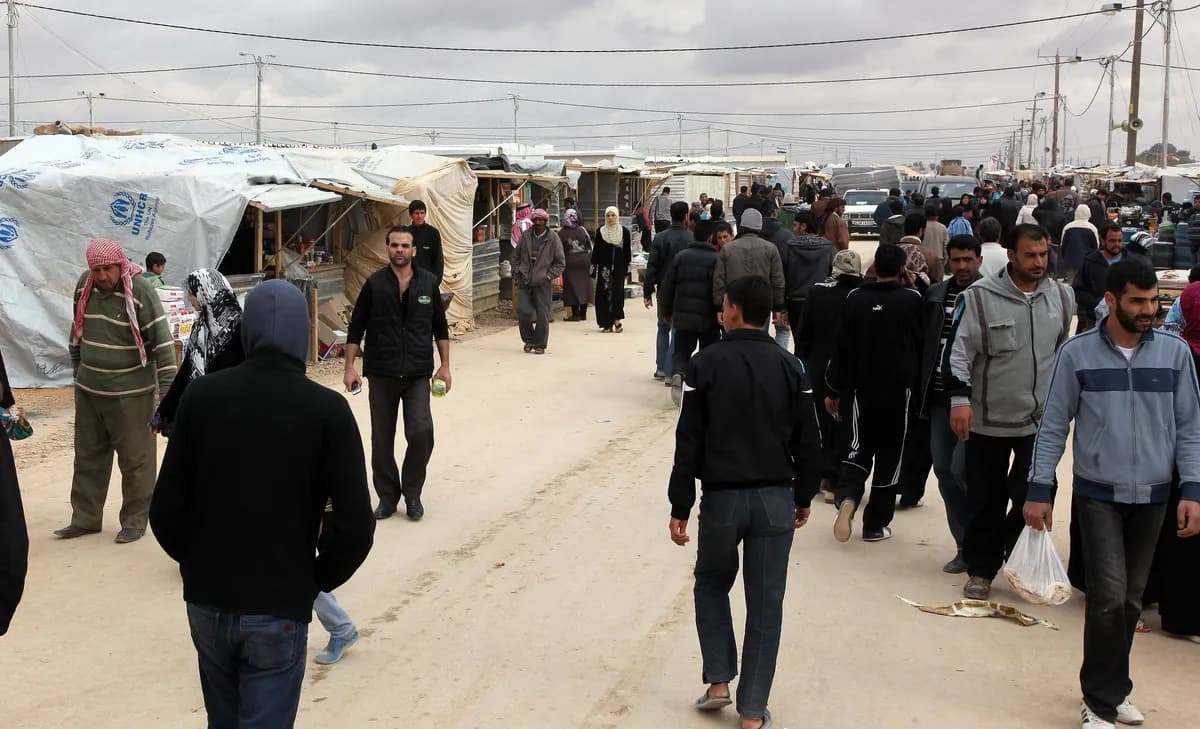
Joseph, a 14-year-old boy living in Kakuma refugee camp in northwestern Kenya, now makes and sells items like backpacks, bags, skirts, and shoes from plastic bottle caps to afford school supplies. His school no longer provides free supplies such as pens, textbooks, and backpacks, forcing him to generate his own income. His story emerges amid extensive aid cuts in many countries affecting places like Kakuma refugee camp. Problems in Kakuma after aid cuts include increasing issues with access to drinking water and sewage system improvement, fewer medicines and lower capacity in healthcare, severe cuts in psychosocial help, trauma treatment, and follow-up for vulnerable children, and less food for distribution. New refugees from ongoing conflicts in South Sudan are accumulating at the arrival center, compounding these challenges.
Major donor countries are reducing their aid commitments globally. The UK has cut aid and signals further cuts in 2027, from 0.5% to 0.3% of gross national income. France is not on track to meet the 0.7% of GNI aid target, projected at 0.38% in 2026. Germany's aid is declining from 0.68% of GNI in 2024 to 0.52% in 2026, with further cuts toward 2029. Aid cuts are also occurring in Belgium, Canada, South Korea, the Netherlands, Sweden, and Switzerland. In contrast, Norway maintains its aid percentage at 1% of gross national income, but more varied expenses are included in the aid budget, and Ukraine and Norway are top recipients of Norwegian aid projects in 2026.
The conflict in Sudan has become one of the world's most catastrophic humanitarian disasters, with nearly one in three Sudanese driven from their homes. Samar fled Sudan to a refugee camp in Turkana, Kenya, after conflict broke out in Khartoum three years ago. Kenya is bearing an extraordinary share of the refugee burden from Sudan, with 311,491 registered refugees in Turkana County alone.
In Turkana County, 200 more refugees arrive each week and 400 births are recorded in the camp every month, placing continuous strain on local resources. The healthcare system is particularly overwhelmed by funding cuts and patient loads. Funding to Kenya Red Cross operations has fallen by 54%, causing resource and staff losses. Clinicians at the Kenya Red Cross in Turkana see between 110 and 200 patients a day, exceeding the World Health Organization recommendation of 50 patients per day. Iron supplements for pregnant women have dried up, increasing risks during delivery.
Agencies face significant challenges in managing limited resources. The UNHCR has overall responsibility in Kakuma camp and says it is necessary to prioritize the most acute needs. When supplies run out, agencies borrow from each other and hope for timely deliveries. Kitale, a transit center near Kenya's western border with Uganda, is the first stop for many refugees, handling complex cases like cancer or urgent surgery requiring long-distance referrals.