

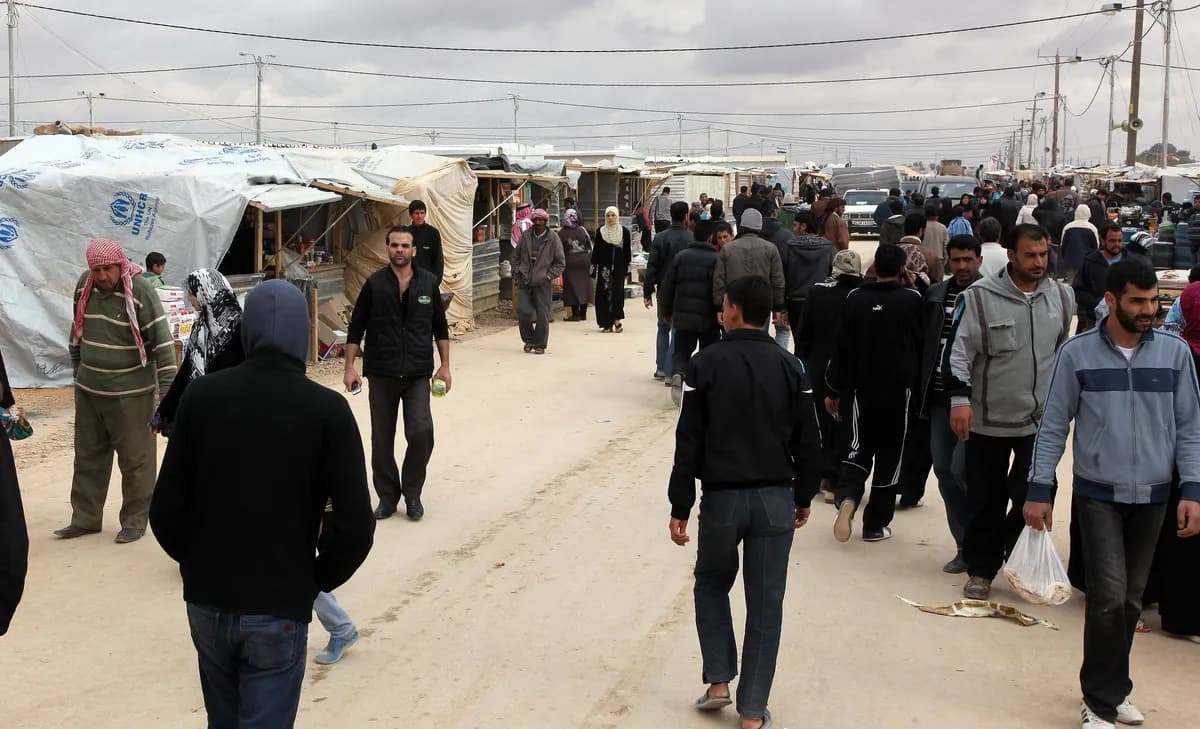
The camp holds approximately 1,100 Afghans, including interpreters for the U.S. military and former members of Afghan Special Operations forces, according to multiple reports. More than 400 of the stranded Afghans are children. The group has been waiting for resettlement after supporting American war efforts, but the Trump administration has effectively suspended refugee admissions, leaving them in limbo.
Masoud Jamshidi, brother of retired U.S. Marine Gunnery Sgt. Sean Jamshidi, has been waiting for a flight to the U.S. for over a year, illustrating the prolonged uncertainty faced by many. The Biden administration had promised the Afghans a path to settlement in the United States following additional background checks, but Trump's suspension of refugee admissions stranded thousands of already-vetted refugees, according to major media reports.
The Taliban will kill him for what he did.
The U.S. has resettled more than 190,000 Afghans who supported American war efforts between August 2021 and mid-2025, but the current stranded group remains in limbo. Advocates warn that returning Afghans to Afghanistan would mean 'certain death,' highlighting the danger of the Taliban. Sean Jamshidi said in a press conference that the Taliban would kill his brother for what he did.
Details about the DRC plan, such as how many Afghans would go and when, are unclear. Shawn VanDiver, president of #AfghanEvac, was briefed by U.S. officials on the DRC plan. A State Department spokesperson said the U.S. is working to find voluntary resettlement options for residents of Camp As-Sayliyah, and that moving Afghans to a third country would provide a chance to start a new life while maintaining U.S. safety.
Kinshasa won’t kill him on Day One, but the State Department knows there’s no community for him there, no legal status, and no real protection for him or for the children traveling with these families. They know they are offering him an option they know will be refused, just so they can say they tried. This is not a real choice. This is not policy. This is theater.
Taiba Nawabi, a 27-year-old Afghan woman now in Pakistan, was physically attacked by the Taliban after it reclaimed power in 2021, underscoring the risks of return. Her account illustrates the dangers that advocates say await those sent back.
There is a fundamental disagreement between the U.S. government and advocates about the safety and ethics of the DRC option. The State Department says moving Afghans to a third country provides a chance to start a new life while maintaining U.S. safety. But advocates and Sean Jamshidi argue the DRC is unsafe and the offer is not a real choice, but a way for the U.S. to wash its hands of the Afghans. Sean Jamshidi said that Kinshasa won't kill his brother on day one, but the State Department knows there is no community for him there, no legal status, and no real protection for him or for the children traveling with these families. He said they are offering an option they know will be refused, just so they can say they tried, calling it theater.
I saw the displacement camps, I stood in places where the United Nations have counted the dead.
VanDiver expressed similar concerns, saying he worries that this is just a way for State to wash their hands of these folks, many of whom are women, children, and family of U.S. military, that will ultimately result in them becoming stateless or having to go back to certain death in Afghanistan. He added that they know Afghans are not going to accept the DRC, questioning why anyone would go from the world's number one refugee crisis to the world's number two refugee crisis.
Many unknowns remain. It is unclear how many Afghans would be sent to the DRC and when the plan would begin. The legal status and protections Afghans would receive in the DRC have not been specified. It is also unknown whether any Afghans have accepted the DRC option or are all refusing. The Trump administration's official rationale for halting refugee admissions for these Afghans has not been fully explained, and what alternative resettlement options are being considered besides the DRC remains unclear.
The Democratic Republic of the Congo is not a place where you send vetted Afghan allies and their children to live. It is not a place you send anyone, voluntarily or otherwise. This is a country with a long history of corruption, war and foreign exploitation that has left it deeply unstable and is lacking basic services. And the United States government knows this.
The situation at Camp As Sayliyah highlights the ongoing challenges faced by Afghans who aided the U.S. mission. As the Trump administration continues to restrict refugee admissions, the fate of hundreds of families hangs in the balance, with no clear resolution in sight.
We are telling American allies — people who stood with us, who are vetted, who supported our mission — to go somewhere the United States government itself warns Americans not to go. This should not make sense to anyone.