

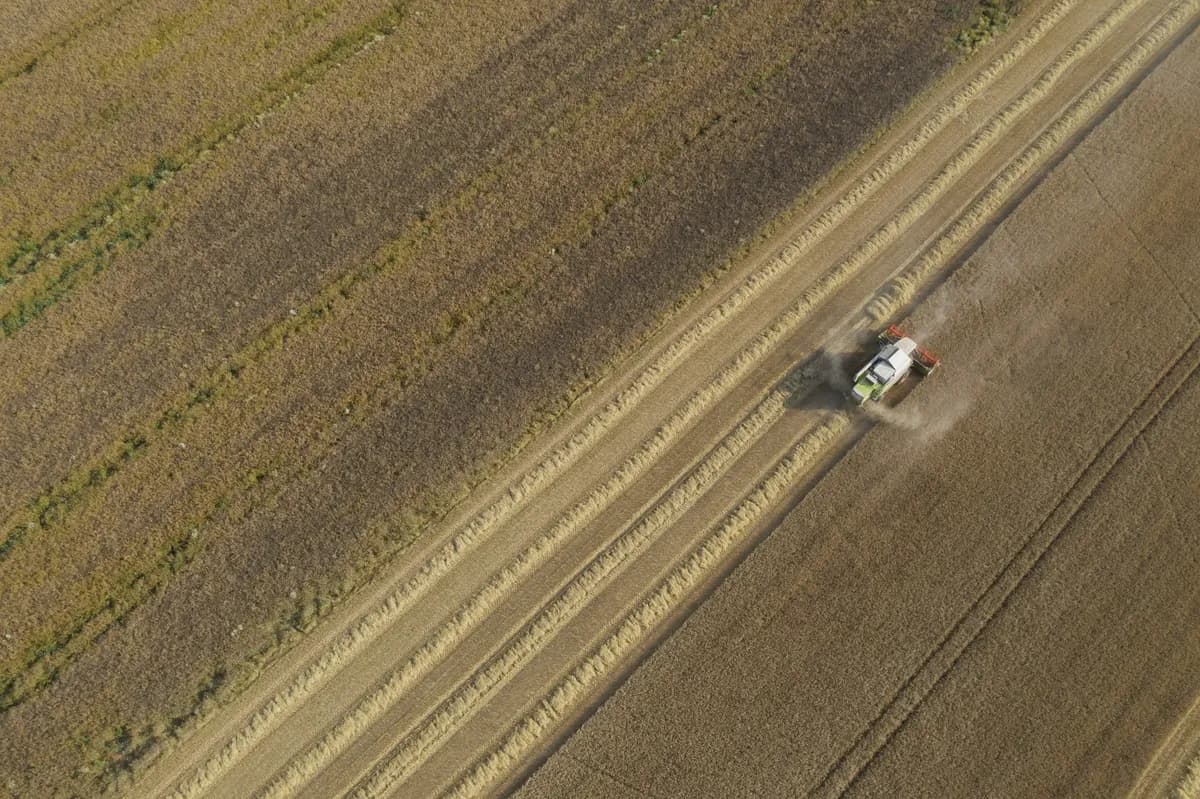
The report, which analyzes agricultural production, food consumption, and imports during a normal year, contends that Sweden's food preparedness should be assessed based on how much energy and nutrition domestic production can provide relative to population needs, not on the share of imported food. According to Aftonbladet, Elin Röös described Sweden as producing a lot of food relative to the population's needs. Sweden currently produces up to twice as much food as needed, according to the SLU researchers' findings.
In 2024, Swedish farmers produced 20 billion calories in food crops like cereals, rapeseed, sugar, and vegetables. This calorie production is enough to supply a population of 15–20 million people, far exceeding Sweden's current population of about 10 million. Forty-one percent of what is grown on Swedish fields is grass and clover eaten by animals, but an equally large part of what humans could eat also becomes animal feed. According to Aftonbladet, Elin Röös described this as a resource waste that occurs globally, where many food crops are used for animal production.
We produce a lot of food in Sweden relative to the population's needs.
Depending on calculation, 40–50 percent of what is eaten in Sweden is imported. These imports include coffee, cocoa, fruit, wine, rice, vegetables, alcohol, meat, palm oil, cheese, sugar, candy, and chocolate. A high import share is not necessarily a danger, especially if imports consist of items not needed in a crisis. According to Aftonbladet, Elin Röös explained that especially if imports are things not needed in a crisis, which to a large extent they are, people can manage without fruit and vegetables for quite a long time.
In a hypothetical scenario where imports are cut off, a Swedish plate would include cereals in forms like bread, pasta, and porridge, along with meat, milk, rapeseed oil, potatoes, eggs, and sugar, but less fruit and vegetables than today. Sweden produces less red meat, pork, and poultry than consumed, but Swedes eat more meat than recommended. Swedish fruit and vegetable production, despite increasing since the 1990s, only provides 110 grams per person, compared to the recommended 500 grams per day for adults. Sweden produces more milk than consumed, but much is exported as milk powder, while cheese is imported. If imports were cut off, Sweden would not starve, but the diet would become significantly less varied, according to multiple reports.
We have plenty of energy and protein so it covers our needs, and also fat, although the margin there is not as large.
Food supply requires not only agricultural production but also infrastructure, labor, and inputs like fuel to maintain transport, trade, storage, and preparation. According to Göteborgs-Posten, Rasmus Einarsson described diesel as completely decisive for all of agriculture, as tractors, trucks, and transport run on diesel. Prices for electricity, fuel, fertilizer, and animal feed increased during the pandemic, leading to higher production and food prices. The report does not specify how Sweden's food production capacity would be affected in a crisis that disrupts inputs like diesel, fertilizer, or labor.
The report states that famine and starvation can arise from prolonged crisis combined with lack of emergency aid, but it is incorrect to claim, based on Sweden's food imports, that the population risks sudden famine. During the pandemic, weaknesses in preparedness were exposed, such as lack of emergency stocks and reliance on vulnerable supply chains. It remains unclear what specific type of crisis is envisioned in the report that would only affect food imports but not other factors like infrastructure or energy.
It is a resource waste of course and that's how it looks in the whole world, that we use a lot of food crops for animal production.
The number of farmers is decreasing and aging, with small farms being replaced by large-scale operations. This structural challenge in Swedish agriculture could impact long-term resilience, though the report's detailed recommendations for improving food preparedness beyond these observations are not specified.
The report by researchers in collaboration with the Swedish University of Agricultural Sciences examines Sweden's food preparedness. It remains unknown to what extent current food storage, logistics, and processing capabilities are prepared for a crisis scenario. According to Aftonbladet, Elin Röös warned that the message becomes wrong and can worry people unnecessarily if they think food production in Sweden is low, potentially leading to investments in the wrong things.
It is cereals in some forms – bread, pasta, porridge. Then there is meat and milk, rapeseed oil and some potatoes. We also have eggs so we manage, and sugar, but there will be less fruit and greens than we eat today.
Especially if the imports are things we don't need in a crisis, which to a large extent they are. You can manage without fruit and vegetables for quite a long time.
The message becomes wrong, it can also worry people unnecessarily if they think that food production in Sweden is low. And it can also make you invest in the wrong things.
Diesel is completely decisive for all of agriculture. You drive tractors and trucks, transport and other things on diesel.