

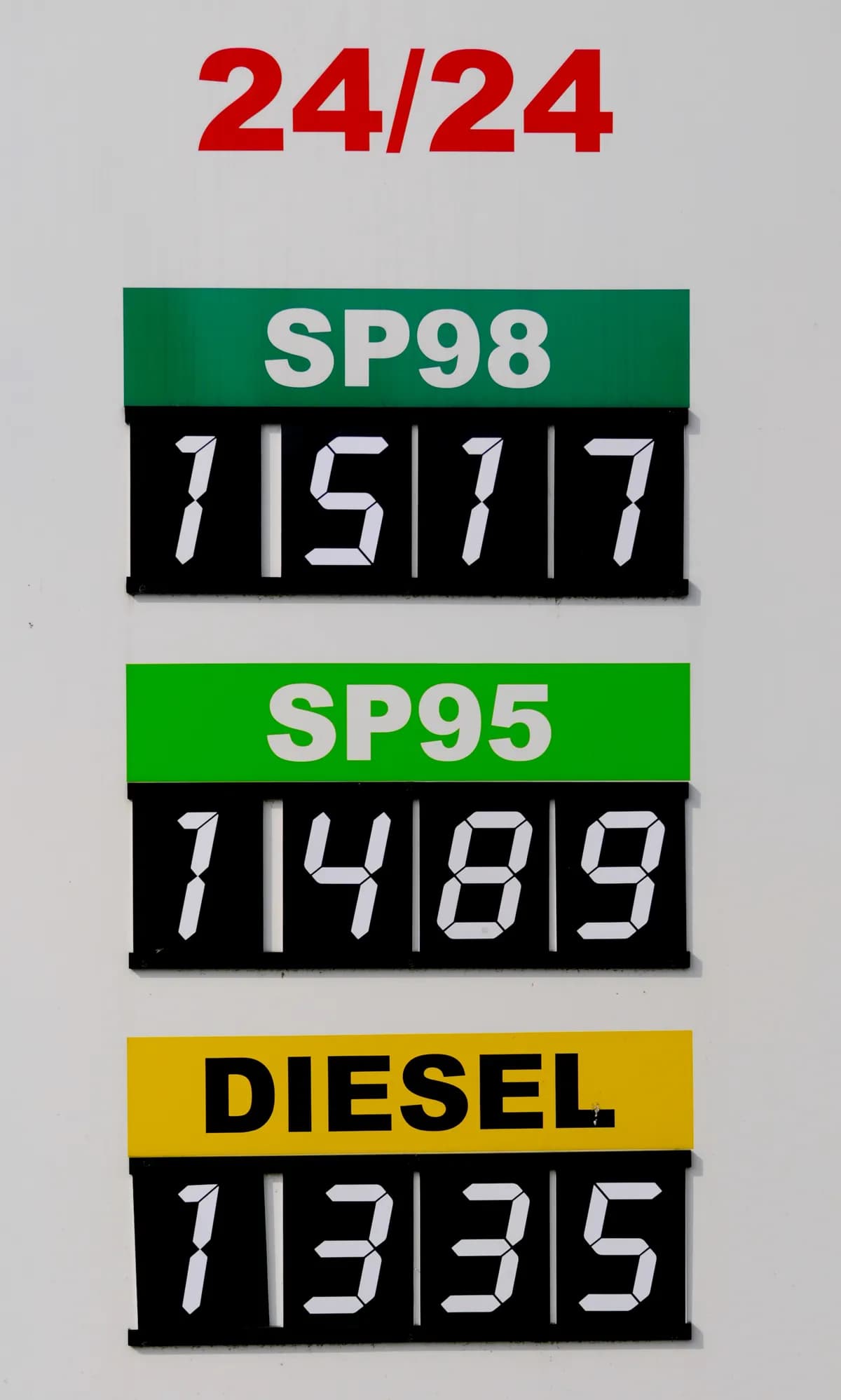
Fuel taxes on gasoline were cut by 4.41 kroner per liter and on diesel by 2.85 kroner from midnight Wednesday, according to multiple reports. Despite the tax cuts, fuel prices at many stations quickly rose back to previous levels after midnight, multiple reports indicate. At a Circle K station in Asker, prices rose back to pre-cut levels at midnight, according to multiple reports. At a station in Førde, diesel cost 24.99 kroner at 23:40 and rose to 26.81 kroner by 05:00, according to multiple reports. A customer named Deni told NRK Norge that prices should be 17-19 kroner per liter. Arne Nistad, owner of Nistad Transport, told NRK Norge that the price development was 'lureri' (deception) and a bad April Fools' joke.
The Consumer Council expressed surprise that prices rose at midnight and expects prices to fall in line with the tax cut, according to NRK Norge, which quoted Olav Kasland, fagsjef marknad i Forbrukkarrådet. According to NRK Norge, Olav Kasland described the competition as too poor in the fuel market. Frp leader Sylvi Listhaug told NRK Norge that it is unacceptable if the tax reductions do not benefit consumers and expects prices to be reduced correspondingly. Uno-X's daily leader Thor Kristian Korsvold promised that the entire tax cut will benefit consumers and that prices are adjusted frequently based on local competition and international prices, according to Adresseavisen. Circle K's communication leader Kjetil Foyn assured that the tax cut was implemented at all stations and that price fluctuations are normal, according to Adresseavisen.
The Consumer Council expressed surprise that prices rose at midnight and expects prices to fall in line with the tax cut.
The impact on businesses has been severe. PK Strøm, a construction machinery company in Saltdal, uses over 870,000 liters of diesel annually and loses around 6-7 million kroner per year due to price increases, according to its administrerende direktør Carl Christian Moland. Farmer Jan Erik Fløtre from Byrkjelo told NRK that filling 200 liters costs about 4600 kroner and expects to lose 100,000 kroner in increased costs if prices remain at current levels. According to NRK, Jan Erik Fløtre described having hoped for even lower prices despite the tax cuts. Thomas Østerbø in Entreprenørservice told NRK that the main problem is the general price level of fuel, which is much higher than a few months ago. Pål Edvin Joakim Olsen, leader of Norges Lastebileierforbund in Finnmark, told NRK Troms og Finnmark that the tax cuts are fantastic and will save his firm about two kroner per kilometer. Tom Vegar Kiil in Kystfiskarlaget told NRK Troms og Finnmark that he fears fuel prices may rise above 30 kroner per liter and stronger measures are needed.
Disabled individuals have also been hit hard. Wheelchair user Bjørn Thomassen told NRK Troms og Finnmark that fuel prices are becoming very expensive for disabled people on benefits. According to NRK Troms og Finnmark, Bjørn Thomassen questioned whether politicians have considered disabled people who rely on diesel-powered adapted vehicles. Tove Linnea Brandvik, leader of Norges Handikapforbund, told NRK Troms og Finnmark that disabled people cannot choose electric cars because their adapted vehicles come from Nav and are diesel. State Secretary Edvin Søvik told NRK Troms og Finnmark that disability benefits have increased more than price growth in recent years, but acknowledged that general measures do not always reach everyone. Bjørn Thomassen's car has an 80-liter tank, costing nearly 2,000 kroner to fill, according to multiple reports.
The Consumer Council says competition is too poor in the fuel market.
The government initially only cut taxes for ordinary gasoline and diesel (pumpepris), not for autodiesel and construction diesel as previously decided, according to multiple reports. Finance Minister Jens Stoltenberg said the removal of CO2 tax on autodiesel and construction diesel may constitute illegal state aid under the EEA Agreement. According to NRK Nordland, Julie Brodtkorb in Maskinentreprenørenes Forbund described the government's claim that EEA rules hinder a temporary CO2 tax cut for construction diesel as incorrect. Professor Erling Johan Hjelmeng at UiO told NRK Nordland that selective tax cuts can be a real legal problem under EEA state aid rules. ESA's Jarle Hetland confirmed dialogue with Norway but said no formal decision has been made, according to NRK Nyheter.
Reactions from affected industries and political parties to the delay have been strong. According to NRK Nordland, Carl Christian Moland described the delay as 'latterlig' (ridiculous). According to NRK Nyheter, Tor Arne Borge of Kystrederiene described the government's delay of tax cuts for domestic shipping as 'sjokkerende' (shocking). Senterpartiet will vote for urgent processing of proposals for temporary fuel tax cuts, according to multiple reports. According to NRK Nyheter, Nikolai Astrup (Høyre) described it as urgent to implement measures. According to NRK Nyheter, Tuva Moflag (Arbeiderpartiet) warned against urgent processing, arguing tax changes should be properly assessed in ordinary budget rounds.
A customer named Deni said prices should be 17-19 kroner per liter.
Norway's parliament approved temporary cuts to gasoline and diesel taxes, overriding the government, at an estimated cost of 6.7 billion Norwegian kroner ($630 million), according to multiple reports. The measures include temporary reduction in road tolls from April 1 to Sept. 1 and cuts to CO2-related fuel taxes, according to multiple reports. Finance Minister Jens Stoltenberg said the government would comply despite opposing the measures, according to multiple reports. Center Party leader Trygve Slagsvold Vedum defended the decision as necessary to ease burdens on households and businesses. Prime Minister Jonas Gahr Store warned the move could increase price growth and the risk of higher interest rates.
Regional perspectives highlight the importance of fuel prices in remote areas. According to NRK Troms og Finnmark, Erling Sande (Sp) described fuel prices as crucial for people in Finnmark due to long distances and no public transport alternatives. According to NRK, Geir Pollestad (Senterpartiet) described the tax cut of 2.50 kroner as significant but understands farmers want more. According to NRK, Ove Trellevik (Høyre) described the measures as should be noticeable. Some measures, including tax on tax-free diesel used by farmers, are expected to be implemented after Easter, according to multiple reports.
Arne Nistad, owner of Nistad Transport, called the price development 'lureri' (deception) and a bad April Fools' joke.
It remains unclear whether fuel prices will eventually fall to reflect the tax cuts, or whether the delayed CO2 tax cuts for autodiesel, construction diesel, and domestic shipping will be implemented. The exact legal status of the EEA state aid assessment by ESA regarding the proposed tax cuts has not been disclosed.
Frp leader Sylvi Listhaug said it is unacceptable if the tax reductions do not benefit consumers and expects prices to be reduced correspondingly.
Carl Christian Moland reacted strongly to the delay, calling it 'latterlig' (ridiculous).
Julie Brodtkorb in Maskinentreprenørenes Forbund said the government's claim that EEA rules hinder a temporary CO2 tax cut for construction diesel is incorrect.
Professor Erling Johan Hjelmeng at UiO said selective tax cuts can be a real legal problem under EEA state aid rules.
Farmer Jan Erik Fløtre from Byrkjelo said filling 200 liters costs about 4600 kroner and expects to lose 100,000 kroner in increased costs if prices remain at current levels.
Fløtre, leader of Vestland Bondelag, said he had hoped for even lower prices despite the tax cuts.
Thomas Østerbø in Entreprenørservice said the main problem is the general price level of fuel, which is much higher than a few months ago.
Senterpartiet's Geir Pollestad said the tax cut of 2.50 kroner is significant but understands farmers want more.
Høyre's Ove Trellevik said the measures should be noticeable.
Wheelchair user Bjørn Thomassen said fuel prices are becoming very expensive for disabled people on benefits.
Bjørn Thomassen questioned whether politicians have considered disabled people who rely on diesel-powered adapted vehicles.
Tove Linnea Brandvik, leader of Norges Handikapforbund, said disabled people cannot choose electric cars because their adapted vehicles come from Nav and are diesel.
State Secretary Edvin Søvik said disability benefits have increased more than price growth in recent years, but acknowledged that general measures do not always reach everyone.
Pål Edvin Joakim Olsen, leader of Norges Lastebileierforbund in Finnmark, said the tax cuts are fantastic and will save his firm about two kroner per kilometer.
Tom Vegar Kiil in Kystfiskarlaget fears fuel prices may rise above 30 kroner per liter and stronger measures are needed.
Storting representative Erling Sande (Sp) said fuel prices are crucial for people in Finnmark due to long distances and no public transport alternatives.
Uno-X's daily leader Thor Kristian Korsvold promised that the entire tax cut will benefit consumers and that prices are adjusted frequently based on local competition and international prices.
Circle K's communication leader Kjetil Foyn assured that the tax cut was implemented at all stations and that price fluctuations are normal.
Høyre's Nikolai Astrup said it is urgent to implement measures.
Arbeiderpartiet's Tuva Moflag warned against urgent processing, arguing tax changes should be properly assessed in ordinary budget rounds.
ESA's Jarle Hetland confirmed dialogue with Norway but said no formal decision has been made.
Kystrederiene reacted strongly to the government's delay of tax cuts for domestic shipping, calling it 'sjokkerende' (shocking).