

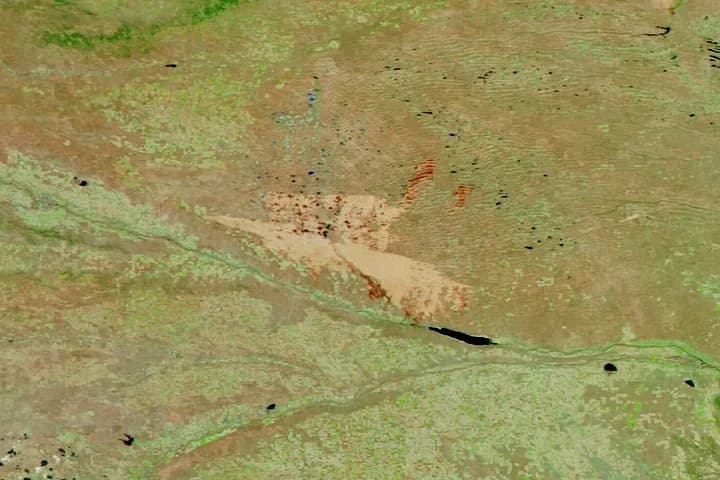
The Morrill fire, which began on the afternoon of March 12, 2026, according to officials, rapidly escalated into a catastrophe of unprecedented scale for Nebraska. It burned over 640,000 acres within a week, setting a state record for wildfire size. The fire's speed was staggering, covering more than 70 miles in the initial 12 hours, multiple reports indicate. This ferocious advance claimed the life of 86-year-old Rose White, a great-grandmother who was trying to flee her home on the Nebraska prairie, according to major media sources. The human tragedy underscored the fire's relentless pace and the challenges faced by residents in its path.
Firefighting efforts have seen significant progress but remain complex and ongoing. The Morrill fire was 100 percent contained by March 29, officials said. However, earlier in the month, the situation was far more precarious; the Morrill County fire remained only 16% contained by midday Wednesday, March 19, 2026, according to major media reports. Crews were also working to contain two smaller blazes, the Ashby and Minor fires, which ignited early on March 26, officials confirmed. Another fire, the Cottonwood fire, burned more than 205 square miles and was about 40% contained by Wednesday, March 19, 2026, major media reported. A spokesman for the coalition overseeing the firefighting effort noted that conditions remained challenging with potential for rapid spread.
The geographic scope of the wildfires is vast, affecting multiple counties and prompting state-level emergency declarations. Four separate fires have burned around 1,300 square miles — an area larger than Rhode Island, major media reported. The Morrill County fire covers parts of five counties and stretches more than 80 miles from around Bridgeport in the Nebraska Panhandle east to Lake Ogallala, according to major media. In response, Nebraska Governor Jim Pillen declared a state of emergency for seven counties, including Morrill, Garden, Arthur, Keith, Lincoln, Dawson and Frontier, major media noted. This multi-county impact highlights the fire's extensive reach across western Nebraska's landscape.
Property destruction has been severe, with evacuations ordered in several communities. The fires in western Nebraska affected large areas of ranch and pasture lands, destroyed homes, barns, and fences, and injured or killed livestock. The combined fires have forced evacuations in several communities and damaged or destroyed numerous structures, multiple reports indicate. At least one residential area near Jeffrey Reservoir, around the Cottonwood fire, has been evacuated since last weekend, major media reported. These evacuations and structural losses have displaced residents and disrupted daily life across the region.
Livestock losses represent a devastating blow to Nebraska's agricultural sector, though precise numbers are not yet confirmed. Thousands of livestock were killed or severely burned by the fires, according to major media. This agricultural devastation threatens the livelihoods of ranchers and the state's beef industry, with long-term economic implications still unfolding.
Environmental damage has extended to protected wildlife areas, though some migratory patterns have persisted. The Morrill fire burned much of the Crescent Lake National Wildlife Refuge in the Nebraska Sandhills, officials said. However, hundreds of thousands of sandhill cranes are still making their annual migration through the Platte River valley despite the fires, officials reported. The full extent of environmental damage to the Crescent Lake National Wildlife Refuge and other ecosystems remains unknown, with assessments likely to continue for months.
Nationally, the 2026 fire season has been exceptionally active, contributing to the severity in Nebraska. As of March 27, 15,436 fires had burned 1,510,973 acres nationwide in the U.S. in 2026, far higher than the 10-year average, according to the National Interagency Fire Center. Exceptionally dry fuels contributed to rapid fire growth and unusual fire behavior for the time of year in the Great Plains in early 2026, the National Interagency Fire Center reported. These conditions created a tinderbox environment that allowed fires like the Morrill blaze to spread with unprecedented speed and intensity.
Investigations into the causes of the fires are ongoing, with multiple potential ignition sources under scrutiny. The Morrill fire was likely sparked by an electrical fire caused by powerful winds, according to officials cited by major media. The Road 203 Fire may have originated from a federal prescribed burn, though investigations remain ongoing, authorities told major media. The exact cause of the Morrill fire ignition, beyond the 'likely electrical fire' mentioned, is still unknown, with officials continuing to examine evidence.
Government response has included emergency measures to mitigate further risk and support recovery efforts. Nebraska Governor Jim Pillen issued a statewide burn ban through March 27, major media reported. These actions reflect a coordinated effort to prevent additional ignitions while managing the existing blazes. The declaration of a state of emergency for seven counties further enables resource allocation and federal assistance.
Key unknowns persist regarding the fire's origins and the full scale of damage, complicating recovery planning. What is the exact cause of the Morrill fire ignition beyond the 'likely electrical fire' mentioned? How many structures were exactly destroyed or damaged by the wildfires? What is the precise number of livestock killed or injured by the fires? These unanswered questions hinder accurate assessments of loss and the development of targeted aid programs for affected communities.
Unresolved questions also surround the structural and livestock losses, with detailed inventories still underway. The fires in western Nebraska affected large areas of ranch and pasture lands, destroyed homes, barns, and fences, and injured or killed livestock, but exact counts are not yet available. The combined fires have forced evacuations in several communities and damaged or destroyed numerous structures, though a comprehensive tally is pending.
Long-term environmental and economic implications are expected to be profound, affecting Nebraska for years to come. The Morrill fire burned much of the Crescent Lake National Wildlife Refuge in the Nebraska Sandhills, officials said, indicating significant habitat loss. What are the long-term economic and agricultural impacts for Nebraska's ranchers and the state's beef industry? Recovery will likely involve extensive rehabilitation of land, rebuilding of infrastructure, and support for displaced wildlife and communities.