

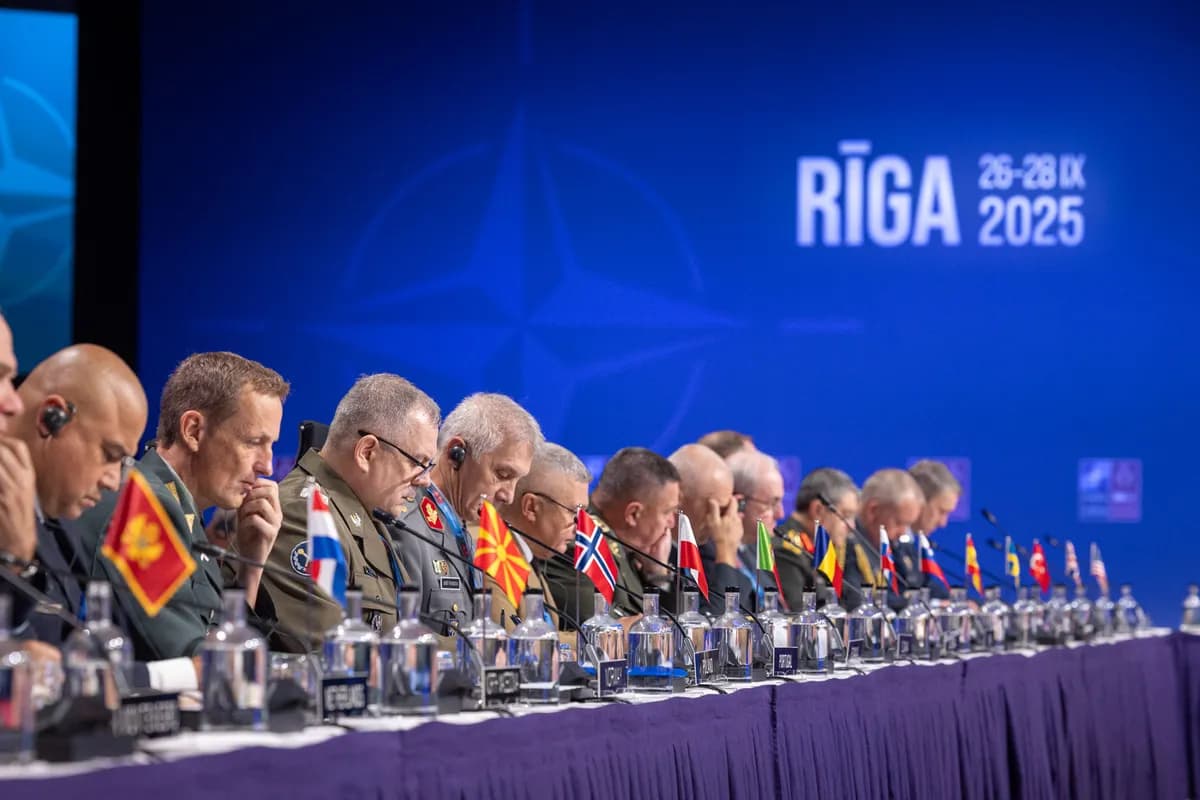
NATO chief Mark Rutte has said Russia could attack a NATO country within the next five years, a timeline echoed by the Danish Defense Intelligence Service, which projects that within six months Russia could wage a local war with a bordering country, and within five years a large-scale attack on Europe if the U.S. does not get involved. However, Sweden’s Military Intelligence and Security Service has offered a more immediate assessment, warning that Russia could be capable of launching a new war against another country within approximately one year. According to a top European spy agency, the MIVD, Russia is preparing to take NATO on in a war and may be ready to attack within just a year of ending its invasion of Ukraine, though the MIVD also stated it is highly unlikely Russia would start a war while still battling Ukraine. This disagreement among intelligence agencies highlights uncertainty about the immediacy of the Russian threat and affects assessments of NATO's preparedness timeline.
Russia's capacity for prolonged conflict is underpinned by a significant military buildup and a war economy. EFIS analysts conclude that Russia is actively mobilising more resources despite extensive battlefield losses, with EFIS stating that Russia has grown its forces beyond pre-war levels of 600,000-700,000 personnel and aims to have a 1.5 million-strong military by 2026. A Kiel Institute for the World Economy report details that Russia's economy is on a war footing, producing around 150 tanks, 550 infantry fighting vehicles, 120 Lancet drones, and over 50 artillery pieces monthly. The Swedish assessment notes that Russia maintains a strategic ambition to confront the West and is adapting its economy, industry, and armed forces for a prolonged war, with EFIS reporting that Russia intends to invest on average €1 million annually until 2030 into drone development and production.
This military expansion occurs in the context of Russia's full-scale invasion of Ukraine in February 2022, which research indicates is the biggest conflict in Europe since World War II. Following its annexation of Crimea and war in Donbas in 2014, Russia was ejected from the G8, according to research. The invasion has reshaped European security dynamics, with Germany and other European countries having previously relied heavily on Russian energy imports; research shows Russia provided 55% of Germany’s gas consumption prior to 2022.
Russia's deepening alliance with China is enhancing its military confidence and capabilities. According to the MIVD, the Kremlin is being emboldened by its ever-deepening ties with China, with the spy agency stating that Russia is becoming more confident in its ability to hit military and civilian targets in the West due to these growing ties. Research indicates Russia has increased its influence in parts of the Global South and has allied itself with China, Iran, and North Korea. The MIVD notes that Russia is keen to benefit from Chinese exports that support its arms industry, while China wants to learn from Russia's combat experience in Ukraine.
Recent months have seen a spike in Russian provocations testing NATO air defenses in the Baltic region. On September 10, two dozen Russian Geran-2 drones strayed into NATO airspace, testing Polish air defences, according to research, which notes that during the preceding three and a half years of war in Ukraine, only three drones had strayed into Poland. On September 19, three Russian MiG-31 fighter jets entered Estonian airspace over the Gulf of Finland for 12 minutes, intercepted by Italian F-35s, research states. Further incidents occurred on September 21, when Germany scrambled two Eurofighters to intercept a Russian Ilyushin 20-M reconnaissance aircraft flying without a flight plan or radio contact in its Baltic Sea airspace, and on September 25, when NATO command said two Hungarian Gripen fighters took off from Lithuania to intercept Russian Su-30, Su-35, and MiG aircraft.
Russia has also engaged in hybrid warfare, including sabotage, disinformation campaigns, and attacks on civilian shipping. Since 2022, Russian intelligence has been accused of sabotage and disinformation campaigns designed to disorient and divide, research indicates. Between 24 February 2022 and 11 October 2024, Russian forces damaged 22 foreign civilian vessels in the Odesa region, with over 85% of these attacks occurring after Russia’s withdrawal from the Black Sea Grain Initiative on 17 July 2023, according to research.
The conflict in Ukraine has drawn in other actors, with North Korean involvement reported. NATO Secretary General Mark Rutte announced that South Korean intelligence officials shared evidence with NATO officials on October 28 that North Korean units are operating in Kursk Oblast. Research indicates that Ukraine’s Main Military Intelligence Directorate reported on October 27 that Russian forces are transferring North Korean military personnel along the E38 Kursk-Voronezh highway in vehicles with civilian license plates. According to Ukraine’s Pivnich Operational Command Spokesperson Vadym Mysnyk, Ukrainian forces have not engaged North Korean forces in combat or taken them as prisoners of war, although Ukrainian intelligence has information indicating their transfer to Kursk Oblast.
Cyber threats from state-sponsored actors are a growing concern for Britain and Europe. According to Richard Horne, chief executive of the National Cyber Security Centre (NCSC), Britain should brace for a rise in cyberattacks linked to hostile states, with the NCSC handling about four nationally significant cyber incidents a week on average. Horne stated that the highest-impact cyberattacks are increasingly tied to governments rather than criminal gangs alone, and that the majority of the most serious cyber incidents now originate 'directly or indirectly' from nation states, including China, Iran, and Russia, with such activity being directed at Britain and its European partners. Horne described the current period as 'the most seismic geopolitical shift in modern history.'
Despite these state-sponsored threats, criminal cyber threats remain common, with ransomware as the most frequent risk. Richard Horne noted that criminal threats such as ransomware remain the most common risk facing organisations.
European vulnerabilities are compounded by unpreparedness and intelligence rifts. Experts have told Al Jazeera that Europe is unprepared to counteract a new chapter of Russian military and intelligence activities in the Baltic and North Seas, with experts saying a growing rift between European and United States intelligence services is leaving the continent unsupported.
Western responses have included increased military aid to Ukraine. The UK Defence Secretary stated that the UK will provide an additional £2.26bn to Ukraine under the Extraordinary Revenue Acceleration Loans scheme, part of a $50 billion G7 loan package, with the loans to be repaid using profits generated from immobilised Russian sovereign assets. The UK has committed £3bn a year of military support to Ukraine each year for as long as it takes, according to the Defence Secretary.
However, EU obstacles have emerged in leveraging Russian assets for Ukraine. Research indicates that Belgium obstructed a plan to use Russian money to finance Ukraine’s defence and turbocharge Europe’s defence industry at the EU summit, and that Russia’s 'shadow fleet' was not mentioned in the EU summit conclusions.
Historical energy dependence has left Europe exposed, with research showing Germany and other European countries continued to import Russian gas, with Russia providing 55% of Germany’s gas consumption prior to 2022.
Ukraine has pursued countermeasures, with research indicating that Ukrainian forces conducted drone strikes against Russian distilleries on the night of October 27 to 28 to reduce Russian aviation capabilities.
Sanctions evasion remains a challenge, with EFIS analysts estimating that up to 80% of sanctioned Western components likely reach Russia through China.
Iranian threats have also targeted Britain, with MI5 stating it disrupted more than 20 Iran-linked plots since 2022, some targeting individuals.