

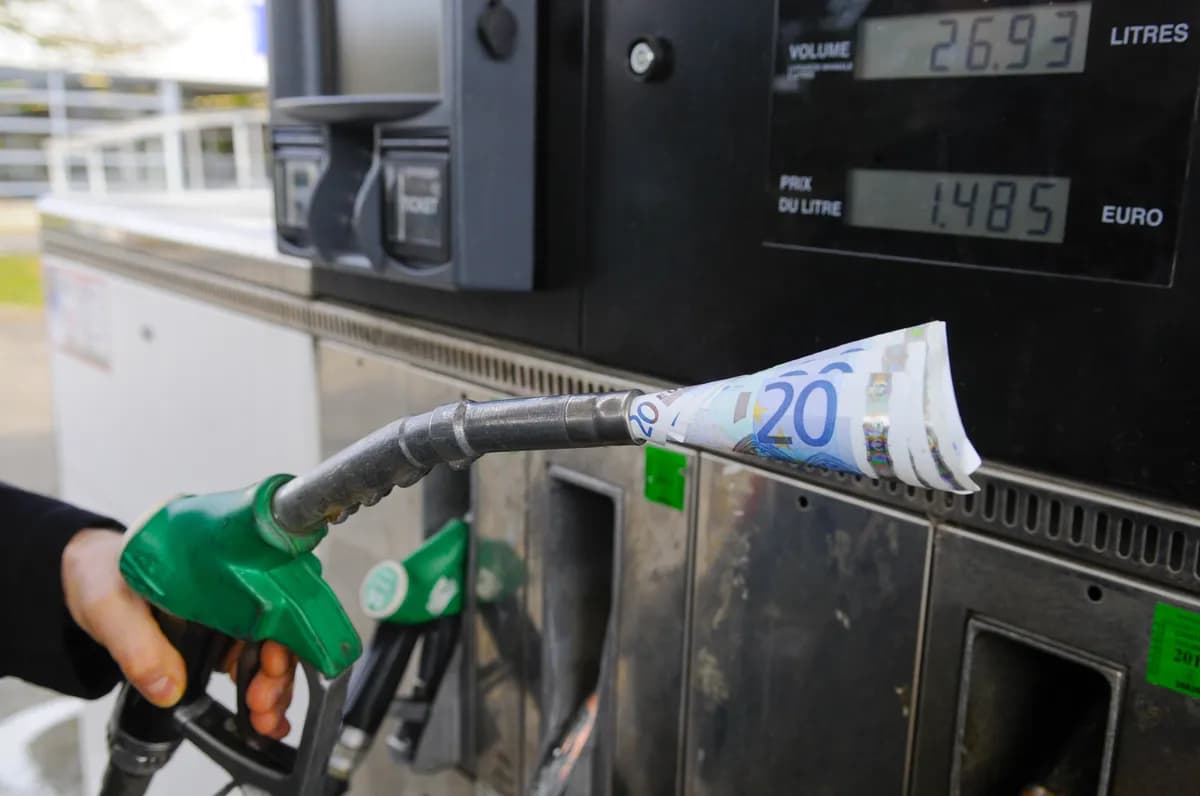
Oil prices have increased sharply since the US and Israel attacked Iran on February 28, nearly doubling from around $60 per barrel to $103 since the turn of the year. The situation in Iran has raised fuel prices worldwide, with the US threatening to open the Strait of Hormuz within 48 hours or face new threats to Iran's energy infrastructure. Oil prices fell significantly after a message from Trump that he would not attack Iran's energy infrastructure, but volatility remains high.
The Swedish government and the Sweden Democrats are implementing new measures to combat high electricity and fuel prices, including a temporarily lowered tax on gasoline. The temporary tax reduction in Sweden is effective from May 1 to September 30, 2026. The tax cut in Sweden reduces the pump price by about 1 krona per liter for gasoline and 40 öre per liter for diesel. The Tidö parties in Sweden will lower the tax on petrol and diesel to the EU minimum level. The Swedish government wants to reduce the fuel tax by an additional 3 kronor per liter for five months if prices remain high, pending EU approval.
A new broad electricity support will be introduced in Sweden to compensate for high electricity prices. The parties in Sweden also propose a strengthened electricity support to be paid out for January and February this year. The electric car premium in Sweden will be strengthened. Sweden has an oil reserve that lasts about 90 days.
The Irish Government announced a fuel-relief package including a 15 cent per liter reduction on petrol, 20 cent per liter off diesel, and removal of a 2 cent per liter levy, effective until end of May. The Irish Government is set to collect over €4.5 billion in energy taxes this year. A new carbon tax rate will be introduced in Ireland in May. The Irish Government was taking in over €1 million extra per day on petrol and diesel VAT alone before the relief package, compared to before the Iran crisis. Petrol prices in Ireland went from about €1.73 to €2 per liter, meaning a VAT increase of 5 cents per liter.
In Norway, diesel prices in Meløy commune in Nordland exceeded 30 kroner per liter on Monday, a new record in Norway. The Norwegian Parliament will vote on 23 proposals related to high petrol and diesel taxes. Høyre's proposal in Norway is to temporarily remove the road usage tax on petrol and diesel from April to September. Høyre's proposal would mean a cut in pump price of 4.7 kroner per liter for petrol and 2.85 kroner for diesel including VAT. The war in the Middle East is the main cause of the sharp increase in fuel prices in Norway recently.
The Centre Party in Norway voted with the conservative parties Høyre, Frp, and KrF to secure a majority for a tax cut. The Centre Party proposed temporary cuts in CO2 tax for the fishing fleet, domestic quota-bound shipping, construction diesel, and auto diesel. The new CO2 taxes for industry in Norway are proposed as: fishing and hunting: 0 kr per liter; domestic quota-bound shipping: 0.90 kr per liter; auto diesel: 3.09 kr per liter; construction diesel: 1.92 kr per liter; domestic shipping: 3.17 kr per liter. The Centre Party calculated that their proposals amount to a total tax cut of 270 kroner per tank (assuming 60 liters).
In Finland, fuel prices rose last month: diesel by 16% and 95E petrol by 10% on average. Finland has not decided to lower fuel taxes. In Norway, fuel became cheaper as they lowered the fuel tax until the beginning of September, meaning petrol price decreased by 4.5 kroner and diesel by 3 kroner per liter.
California Proposition 6 was on the ballot as an initiated constitutional amendment on November 6, 2018. A yes vote on Proposition 6 would have repealed fuel tax increases and vehicle fees enacted in 2017, including the Road Repair and Accountability Act of 2017 (RRAA). A yes vote would have required voter approval for the California State Legislature to impose, increase, or extend fuel taxes or vehicle fees in the future. A no vote on Proposition 6 would have kept the 2017 fuel tax increases and vehicle fees in place and allowed the state legislature to impose, increase, or extend such taxes or fees through a two-thirds vote without voter approval. Proposition 6 election results were 43.18% yes and 56.82% no, with results officially certified.
The Road Repair and Accountability Act of 2017 (RRAA) increased the gas tax by $0.12 per gallon, increased the diesel fuel tax by $0.20 per gallon, increased the sales tax on diesel fuels by an additional 4 percentage points, created an annual transportation improvement fee, and created an annual zero-emission vehicles fee. The RRAA was expected to generate an estimated $52.4 billion between 2017 and 2027, according to the state Senate Appropriations Committee. Californians pay the second-highest gas price in the nation behind only Hawaii, with an average price of $4.23 per gallon in January according to the American Automobile Association.
Former Los Angeles Mayor Antonio Villaraigosa is calling for a moratorium on state greenhouse-gas reduction rules that he says add about 50 cents to the price of each gallon of gas. San Jose Mayor Matt Mahan supports temporarily suspending the state gas tax. Republican Steve Hilton has promised to lower the price of gas to $3 a gallon statewide by cutting the gas tax in half and eliminating policies that reduce emissions. Republican Chad Bianco would do away with the gas tax altogether.
California legislators advanced Democrat Lori Wilson’s bill, AB 1421, which would direct the California Transportation Commission and the state Transportation Agency to continue studying options for a mileage-based tax. Under concepts outlined in the study, a mileage-based tax in California could range from two to nine cents per mile. With California drivers logging roughly 11,400 miles a year on average, a mileage charge could cost motorists between $228 and $1,026 annually.
The Social Democrats and the Center Party demanded that the tax on fuel should be temporarily lowered. Prime Minister Ulf Kristersson has in recent days opened up to reduced fuel taxes in Sweden.
Key unknowns remain, including what specific EU approval is required for Sweden's additional 3 kronor per liter tax reduction, and when it is expected. How the Irish fuel-relief package will be funded, and what the long-term fiscal implications are, has not been detailed. The environmental impacts of the temporary tax cuts in Sweden and Norway, and whether there are any mitigation plans, are unclear. How effective the temporary tax cuts have been in actually lowering consumer fuel prices across the affected countries is yet to be fully assessed. The specific details of the strengthened electricity support in Sweden, including eligibility and payment amounts, have not been disclosed.